Trump Open to Reviewing Pardon for Samourai Wallet Dev as DOJ Signals Clash With Sentencing Push
Trump said he’d review a pardon for Samourai Wallet’s Keonne Rodriguez days before his five-year term begins, spotlighting DOJ’s mixed posture toward crypto privacy software.

Because Bitcoin
December 16, 2025
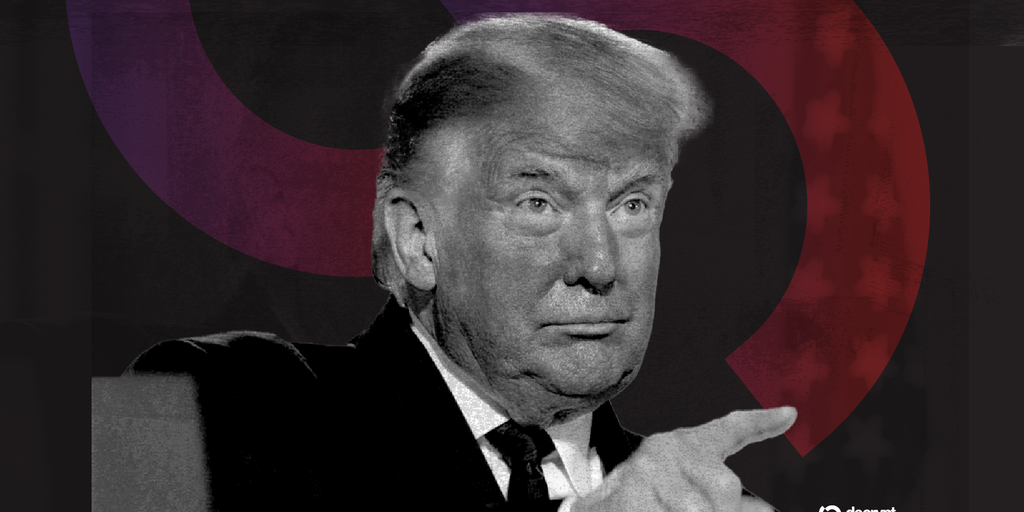
The headline is the pardon talk, but the story is the policy gap. Days before Samourai Wallet developer Keonne Rodriguez is due to enter federal prison, President Donald Trump said in the Oval Office that he was aware of the case and would review it, then directed Attorney General Pam Bondi to examine the request. That single exchange collides with a year of contradictory enforcement messages around non-custodial crypto privacy tools.
Rodriguez was sentenced last month to five years—the statutory maximum—after pleading guilty this summer to operating an unlicensed money transmitting business. His colleague, William Longeran Hill, received four years. Prosecutors under the prior administration accused the pair of running an illegal money transmitter and facilitating criminal activity through Samourai, a wallet that helped Bitcoin users obfuscate transaction histories without taking custody of funds. After Trump returned to office, his DOJ shed several Biden-era cases but continued this one, and asked the court to impose the harshest penalties.
Here’s the tension worth focusing on: In April, deputy attorney Todd Blanche told federal prosecutors to ease off cases targeting crypto privacy software. Months later, a senior DOJ official told industry policy leaders the department would refrain from prosecuting decentralized software developers going forward. Yet the government still pursued Rodriguez and Hill and argued for maximum sentences. That inconsistency is what actually pressures builders—more than any single conviction.
Classifying a non-custodial CoinJoin-style wallet as a “money transmitter” stretches a definition that, in practice, hinges on control of customer funds and the acceptance-and-transmission of value on behalf of others. If the legal theory is that tool design “facilitates” crime regardless of custody, developers can’t reliably price their compliance risk. Capital retreats from privacy R&D, engineers leave the U.S., and the Bitcoin privacy stack stagnates. The Roman Storm conviction on Ethereum has already reinforced those instincts among many teams.
Rodriguez himself doesn’t expect clemency. He contrasted his situation with that of Binance founder Changpeng Zhao—whom Trump pardoned in October—saying he lacks comparable resources or influence. Earlier this year, an Emirati state-owned firm invested $2 billion into Binance via USD1, the stablecoin tied to the Trump family’s World Liberty Financial. Whether or not a pardon materializes, that optics problem will linger: individual acts of mercy don’t resolve whether code without custody should be policed like financial intermediaries.
If the administration truly wants to de-escalate, it needs aligned guidance from DOJ and FinCEN on non-custodial privacy software, coupled with a charging policy that distinguishes code from conduct. Without that, developers will continue to assume asymmetric downside—regardless of a high-profile review in the Oval Office this week.