Trump’s Crypto Year: Regulatory Wins, Privacy Losses, and Bitcoin’s Identity Test
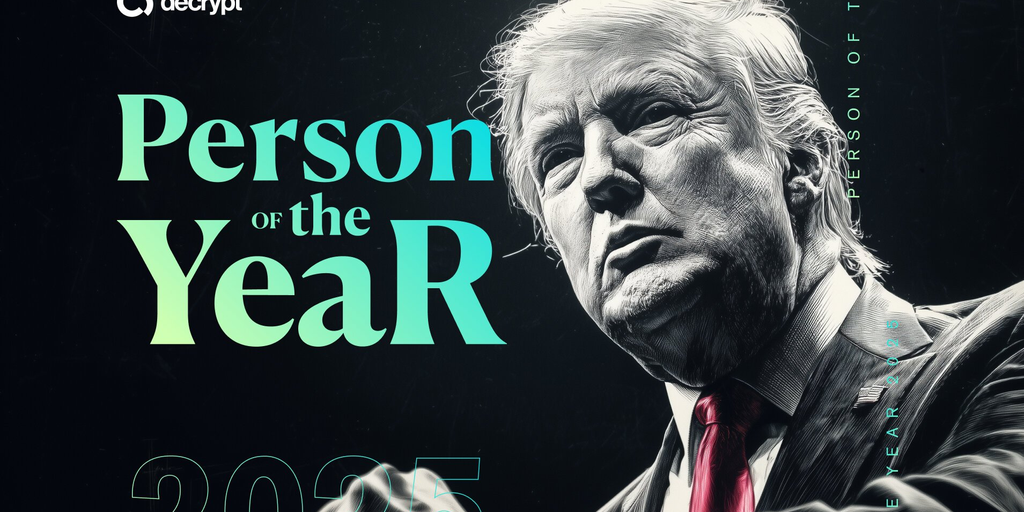
Trump’s 2025 pro-crypto blitz drove policy wins and market momentum—but DOJ actions against privacy tools and conflict concerns raise a deeper question: what happens to Bitcoin’s core ethos?

Because Bitcoin
December 15, 2025
The United States has rarely moved this fast on digital assets. In a single year, the presidency turned crypto from a fringe debate into federal strategy—complete with a strategic Bitcoin reserve, 401(k) access, and a stablecoin law. Markets cheered. Founders exhaled. But the bigger question isn’t valuation; it’s whether this bargain trades Bitcoin’s civil-liberties DNA for state-aligned legitimacy.
Here’s the core tension. The White House delivered a sweeping pro-crypto agenda—an end to SEC oversight of crypto, executive action to establish a federal Bitcoin reserve, and successful passage of the GENIUS Act, which created a U.S. framework for stablecoins typically backed by Treasuries. The administration sold these moves as innovation and dollar-strength strategies, and it also pushed back on allegations that the first family’s crypto business entanglements shaped policy. The press office said conflicts don’t exist and framed the agenda as common-sense growth.
Yet, while agencies dropped or dialed down several inherited cases, the Department of Justice simultaneously pursued and secured convictions against privacy tool developers. Samourai Wallet co-founders Keonne Rodriguez and William Longeran Hill—whose Bitcoin-based software let users obfuscate transaction trails without a human intermediary—pled guilty to operating an unlicensed money transmission business after facing potential 25-year sentences. Rodriguez received five years, Hill four. A separate Ethereum-focused developer, Roman Storm of Tornado Cash, continues to face charges. This came even after an April directive from Deputy Attorney General Todd Blanche to stop pursuing intermediary privacy tools and later assurances that decentralized software builders would see less heat.
Privacy advocates see a clear chill. They argue these prosecutions reframe Bitcoin from peer-to-peer cash into a surveilled investment rail. Rodriguez has said the government views Bitcoin as “fully captured” and easier to see into than cash. On paper, the administration opposes a U.S. CBDC; in practice, critics say, treating non-custodial privacy like money transmission nudges the network toward de facto state visibility.
The politics are messy too. The president’s family reportedly made billions from crypto ventures this year, including a stablecoin tied to the first family’s brand via World Liberty Financial. An Emirati state-owned firm, MGX, used that token to back a $2 billion investment in Binance—an event that drove most of the token’s supply issuance—and Binance reportedly provided engineers to help build the stablecoin. In October, the president pardoned Binance founder Changpeng Zhao after his 2023 anti-money-laundering plea, enabling his return to the exchange. The White House rejects any quid pro quo; skeptics see selective clemency as a feature of a broader patronage economy.
On Capitol Hill, the legislative picture is bifurcated. The GENIUS Act scored a clear win by normalizing stablecoins as a pillar of U.S. market structure and Treasury demand—something Bitcoin purists say expands fiat rails, not self-sovereignty. Meanwhile, a comprehensive market structure bill that would clarify treatment of non-custodial privacy tools passed the House but appears stalled in the Senate, with election dynamics and a possible House flip likely freezing progress. Some in the industry quietly worry that any impeachment effort centered on alleged crypto conflicts of interest would toxify near-term policy prospects.
Washington’s power map has already shifted. Crypto firms now staff K Street aggressively. The Bitcoin Policy Institute grew from three staffers to nearly 20 and helped push the strategic Bitcoin reserve via executive order. Treasury Secretary Scott Bessent even popped into a Bitcoin-themed bar near the White House. Old-guard advocates at Coin Center, who have spent a decade defending civil liberties in crypto, sense a cultural split: fewer people are here for cypherpunk values, more for proximity to state machinery and capital flows. Their bet is long-term: make open-source, peer-to-peer tools ubiquitous enough that any future authoritarian drift struggles to suppress them.
My read, after years in the trenches: what matters isn’t whether the state “embraces” Bitcoin—it’s how. If policy momentum cements Bitcoin as a state-adjacent asset class while criminalizing privacy defaults, the industry wins distribution but loses purpose. If the framework protects non-custodial software, client-side privacy, and permissionless settlement—even when messy—Bitcoin remains an instrument of freedom that institutions can also hold. 2025 delivered clarity: the price of mainstream acceptance is being set right now. Whether builders and policymakers enshrine self-custody and privacy at the edges will decide if this rally is durable policy—or a trade that ages poorly when power changes hands.