Treasury Blacklists Iran’s BitBank for Channeling Bitcoin Tolls From Hormuz to the IRGC
OFAC sanctioned Iran’s BitBank, tied to Babak Zanjani, for routing Bitcoin tolls to the IRGC. New EO 13902 scope hits builders and execs, raising secondary-sanctions risk.

Because Bitcoin
September 18, 2026
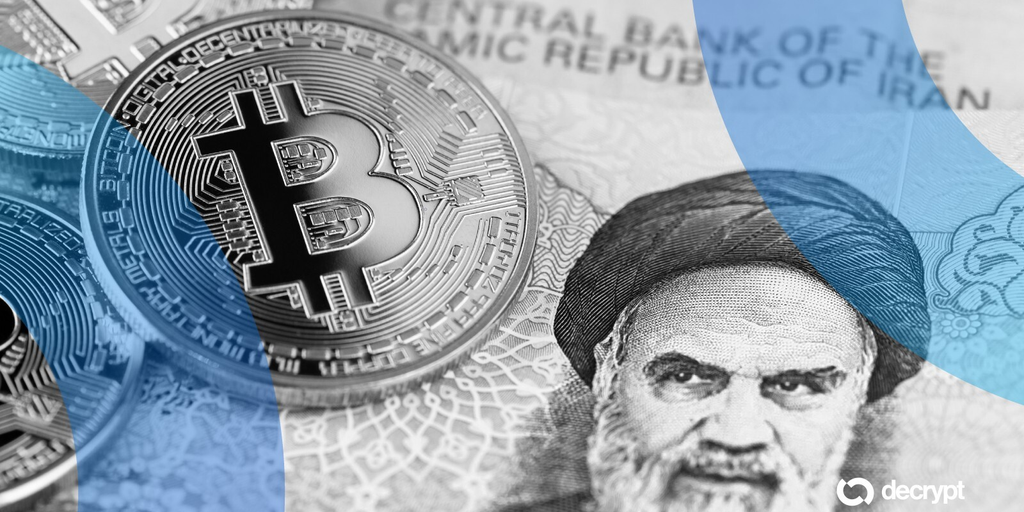
Washington tightened the screws on Iran’s crypto rails, designating BitBank, an Iranian exchange that the U.S. says carried Bitcoin from shipping “tolls” in the Strait of Hormuz into the hands of the Islamic Revolutionary Guard Corps (IRGC). The move puts centralized crypto infrastructure—not just wallets—squarely in the policy crosshairs.
What changed here isn’t the narrative of illicit finance; it’s the enforcement geometry. OFAC is now using Executive Order 13902—expanded in August to anyone operating in Iran’s digital asset sector—to target not only the exchange but the software vendor and named executives that made the platform possible. That upstream reach is the real signal.
Key facts - OFAC designated BitBank, asserting it moved hundreds of millions of dollars in Bitcoin to the IRGC between June and July. - Since June, the Hormuz Safe Marine Services Authority has routed its Bitcoin transit fees through BitBank; that payments scheme was itself sanctioned in July. - BitBank is controlled by financier Babak Zanjani, previously designated in January. He was sentenced to death in 2016 for embezzling from the National Iranian Oil Company; the sentence was commuted in 2024. He re-emerged last year backing regime-linked ventures and has promoted BitBank on social channels since at least 2024. - OFAC also listed Pishtaz Simorgh Electronic Trade Company (BitBank’s software builder), a subsidiary of the already-designated Dot One Value Creation Group, plus three Dot One executives: Hossein Ali Zaker Hossein, Mohammad Mahdi Zaker Hossein, and Seyed Adel Heidari. Treasury describes the first as central to much of Zanjani’s sanctions evasion—oil included—and says he brokered crypto trades that ended with the IRGC. - All five designations fall under EO 13902. U.S. assets are blocked, entities 50%+ owned are captured, and non‑U.S. firms that transact with them face secondary‑sanctions exposure.
Treasury framed the action inside “Operation Economic Outcast,” announced August 24 and informally dubbed “Economic D‑Day,” a coordinated push with the EU, the UK, and Gulf partners to sever Iran’s remaining economic lifelines. In a post on September 17, the department underscored that cryptocurrency financing is within OFAC’s reach and that those facilitating the regime will be sanctioned.
My read: the choke point is no longer merely custodial balances—it’s the full commercial stack. By pulling in the software house and named executives, Washington is telling developers, vendors, and middle managers that “technical contribution” to sanctioned activity can be sanctionable conduct. That shifts incentives in four ways:
- Architecture: Centralized exchanges and service providers that touch Iranian users become liabilities, even if they believe they operate domestically. Expect more hard geofencing, rigorous KYC, and stricter transaction screening for flows proximate to the Gulf and state‑linked entities. - Counterparty psychology: Secondary‑sanctions risk tends to chill behavior quickly. Banks, PSPs, and OTC desks that previously relied on plausible deniability often pivot to “zero Iran exposure” once a named entity links to their graph. Quiet de‑risking will do more damage to these networks than splashy press releases. - Business calculus: Software vendors serving exchanges in high‑risk jurisdictions face a new cost of capital and insurance problem. Some will exit markets; others will restructure governance to distribute personal liability. Regional firms without robust compliance talent will struggle to retain partners. - Ethics of network neutrality: The use of Bitcoin for coercive state rents—charging vessels for passage—forces a reevaluation of “neutral rails” arguments. Open networks don’t absolve intermediaries who curate on‑ and off‑ramps. The more centralized your touchpoints, the more you inherit banks’ obligations.
Market context and timelines - Bitcoin price at publication: $78,062 (+1.33% 24h); 24h range $75,972–$78,372; reported volume $1.2B. - Short‑term odds snapshots: intraday $78k–$80k range seen as a roughly 51% probability; this week, a similar 51% chance of holding above $78k. - On policy timing, a popular prediction venue now puts just a 10% chance (down 30 points) on the U.S. announcing an end to its naval blockade of Iranian shipping by Sept 30, and about 60% by Dec 31—implying traders expect the pressure campaign to persist.
For crypto operators, the takeaway isn’t panic; it’s precision. Map your exposure to Iranian entities, monitor exec‑level designations across your vendors, and assume OFAC will keep working up and down the stack. The window for “we only wrote the code” defenses is narrowing.