Tokenized Stocks Get Cover: SEC and OCC Reset the Rails as Bitcoin Steadies
SEC no-action on tokenized equities, OCC bank charters, and CFTC spot approval signal regulated tokenization, while Bitcoin holds $89.7K and funds quietly buy dips.

Because Bitcoin
December 15, 2025
The weekend price tape was a sideshow; the real action is the policy and plumbing catching up to crypto. With the SEC offering limited shelter to tokenized equities and the OCC blessing key issuers with bank charters, the market finally has the beginnings of regulated rails for on-chain securities.
Prices first, because positioning frames behavior: majors were broadly flat over the weekend—BTC even at $89,700; ETH +1% at $3,150; BNB +1% at $888; SOL +1% at $133. MNT (+10%), MERL (+3%), and TRX (+3%) led movers. Earlier this month, a 2–4% downdraft put BTC at $91,400 (-2%), ETH $3,130 (-2%), BNB $893 (-2%), and SOL $136 (-4%), while ZEC gained 4% and TRX 2%.
The pivot worth focusing on is tokenization entering the regulatory perimeter:
- The SEC issued a no-action letter permitting certain tokenized stock offerings, giving firms a path to launch tokenized equities without immediate enforcement risk. In parallel, the SEC published an investor bulletin on crypto custody—basic, but a necessary precondition for mainstream fiduciaries to get comfortable with wallet, segregation, and control standards. - The OCC granted national bank charters to Circle, Ripple, and other crypto firms. Charter status changes counterparty calculus for treasurers and funds that want fiat settlement on-chain without leaning on shadow banking. - The CFTC approved spot crypto trading on CFTC-registered venues, with Bitnomial set to go first—another brick in the institutional wall for U.S. liquidity. - The U.K. proposed bringing crypto fully under FCA oversight, matching the trend toward supervised tokenized markets rather than perimeter experimentation.
On the product side, the puzzle pieces are aligning. XStocks enabled tokenized equities to move between Solana and Ethereum using Chainlink’s CCIP bridge, attacking the fragmentation penalty that has kept on-chain securities siloed. Tether is weighing tokenizing its stock after pursuing a share sale that could value the company near $500 billion—controversial to some, but a clear signal that private issuers see tokenization as a distribution and liquidity tool, not just a technological novelty.
Investor behavior is telling a quieter story. Research indicates roughly $4 billion in U.S. Bitcoin ETF outflows during October–November came primarily from leveraged basis-trade unwinds across major funds, not panic redemptions. That squares with comments from BlackRock’s Larry Fink that sovereign wealth funds have been steadily accumulating Bitcoin and “bought more” as BTC slid from $126K into the $80Ks—smart money extending duration while arb capital de-gears.
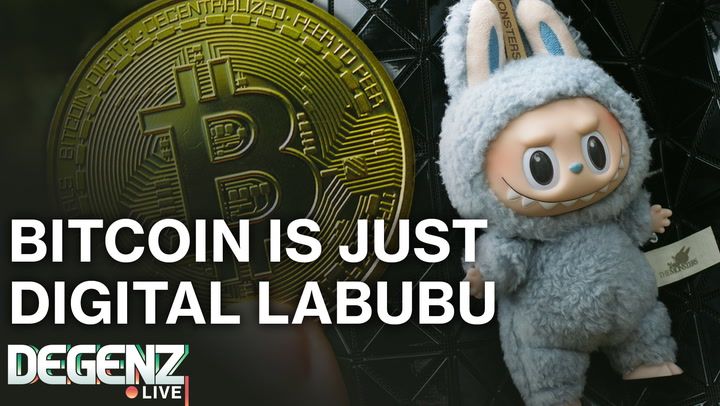
Institutional narratives remain conflicted. Vanguard opened client access to trade crypto ETF products even as its quant equity head likened Bitcoin to a “digital labubu.” The dissonance isn’t hypocrisy; it’s market structure catching up with client demand while internal theses evolve. Meanwhile, Solana and Coinbase’s Base network were linked via a new bridge secured by Chainlink and Coinbase infrastructure—evidence that firms with regulatory footprints are now willing to sponsor interoperability, not just custody.
Culture and politics keep bleeding into the story. Reform UK received its largest-ever political donation from a living donor—$11.4 million—from a Tether-linked investor, underscoring how stablecoin wealth is entering mainstream political finance. Netflix greenlit a crypto-themed comedy, One Attempt Remaining, starring Jennifer Garner—lightweight in market terms, but a marker of crypto’s normalization. The IMF cautioned that rising stablecoin use could weaken central bank control via currency substitution—a reminder that the policy debate is shifting from consumer protection to monetary sovereignty.
Where this goes next: if tokenized equities now have regulatory air cover and cross-chain mobility, the gating factor becomes custody UX and trusted issuance. That’s solvable with bank-chartered issuers (OCC), standardized disclosure (SEC), and reliable bridges (CCIP). The ethical risk is hand-waving retail into products that “look like stocks” but carry novel settlement, oracle, and key-management risks; the SEC’s custody bulletin is a start, not a finish. Technically, bridging security tokens between Solana and Ethereum reduces venue risk but elevates oracle/bridge risk—so assurance layers and attestations matter as much as TPS.
For operators, the playbook is clearer than it has been in years: issue where you can, custody like a fiduciary, and design for cross-chain liquidity from day one. For allocators, treat the noise—ETFs in/out, punditry about “digital labubus”—as flow-driven churn around a slow institutionalization. A 52m:23s deep dive on tokenization with Securitize’s Carlos Domingo and a 25m:45s segment on the recent 2–4% dip both converged on the same takeaway: we’re moving from paper promises to code-enforced claims, and the regulators are finally drawing the map.