Steak ‘n Shake Deepens Bitcoin Strategy With $10M Notional Exposure and Growing BTC Reserve
Steak ‘n Shake adds $10M in notional Bitcoin exposure and keeps all BTC payments in a strategic reserve, after claiming sharp same‑store sales gains since enabling BTC last year.

Because Bitcoin
January 20, 2026
Steak ‘n Shake is tightening its Bitcoin loop: eight months after turning on BTC payments, the restaurant chain says same-store sales have climbed, it is retaining every BTC payment in a dedicated “Strategic Bitcoin Reserve,” and it has added $10 million of notional Bitcoin exposure.
The headline number matters less than the structure. “Notional” suggests the firm expanded exposure via financial instruments—such as futures or options—rather than buying and custodying $10 million of spot BTC. That nuance changes the risk, accounting, and liquidity profile. A derivatives-based overlay can amplify or dampen price sensitivity to match operating needs without committing additional cash to spot. It also introduces potential counterparty, margin, and basis risks that a restaurant operator will need robust controls to manage.
The reserve itself is the interesting flywheel. By holding every BTC payment rather than auto-converting to fiat, Steak ‘n Shake creates a native treasury sink that scales with transaction volume. That design reframes “accepting crypto” from a marketing gimmick into a treasury policy: the payments rail directly funds a BTC-denominated balance that can appreciate, diversify cash, and deepen affinity with Bitcoin-native customers. When a brand says sales are rising after enabling BTC and promotes a Bitcoin-branded menu item, it signals the payoff is as much behavioral as financial—people who identify with Bitcoin often route spend to businesses that align with their values.
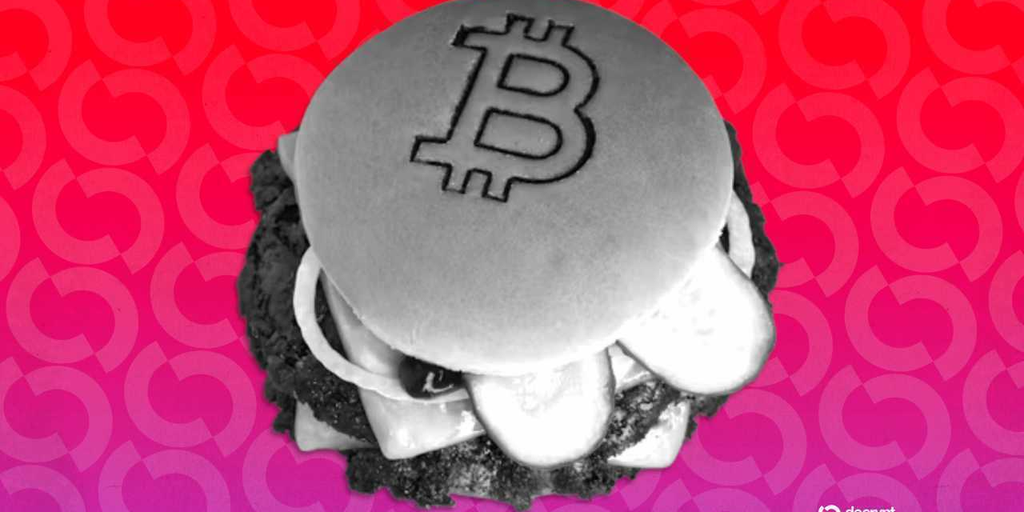
Promotions have reinforced the loop. In October, the company rolled out a Bitcoin-themed Steakburger and partnered with Fold to give buyers $5 in BTC. That bridges the on-ramp from novelty to habit: customers get a taste of BTC, the brand boosts acquisition at a predictable unit cost, and the reserve grows with each payment. If the reserve appreciates, the brand narrative strengthens; if Bitcoin chops, the firm still earns the goodwill dividend and the marketing lift.
Steak ‘n Shake also telegraphed what it won’t do. After polling X users on adding Ethereum payments—and initially indicating it would follow the vote—the company halted the idea under pushback from Bitcoin-first customers, publicly reaffirming a Bitcoin-only stance. Purity has operational benefits: narrower integration scope, cleaner settlement processes, simpler staff training, and a crisper story. The trade-off is foregoing a broader crypto audience, but the brand seems to believe concentration sharpens signal.
One open question is the exact makeup of that $10 million notional exposure. Without detail, observers are left to infer whether the company used exchange-listed futures, options, structured notes, or a mix. Each path carries different cash flow obligations, collateral needs, and volatility capture. For a consumer business with thin margins, instrument choice and risk governance are not footnotes—they determine whether the strategy behaves like a hedge, a levered bet, or a marketing spend with upside.
What to watch next: - On-chain or audit transparency around BTC balances and instruments - Volatility management—especially during high-fee or high-basis regimes - Payment UX and fee handling at the point of sale - Whether BTC promos evolve from one-offs to loyalty primitives
Steak ‘n Shake is treating Bitcoin less like a press release and more like an operating system tweak. The company is tying payments, treasury, and brand identity into a single motion and using financial instrumentation to calibrate exposure. If the reserve continues to compound alongside sales, this might become a template other consumer chains quietly emulate.