Saudi Arabia’s 200‑Qubit Quantum Debut: What It Actually Means for Bitcoin Security
Saudi Aramco installed a 200‑qubit Pasqal quantum computer in Dhahran. Here’s why it doesn’t endanger Bitcoin today—and the milestones that would change that.

Because Bitcoin
November 26, 2025
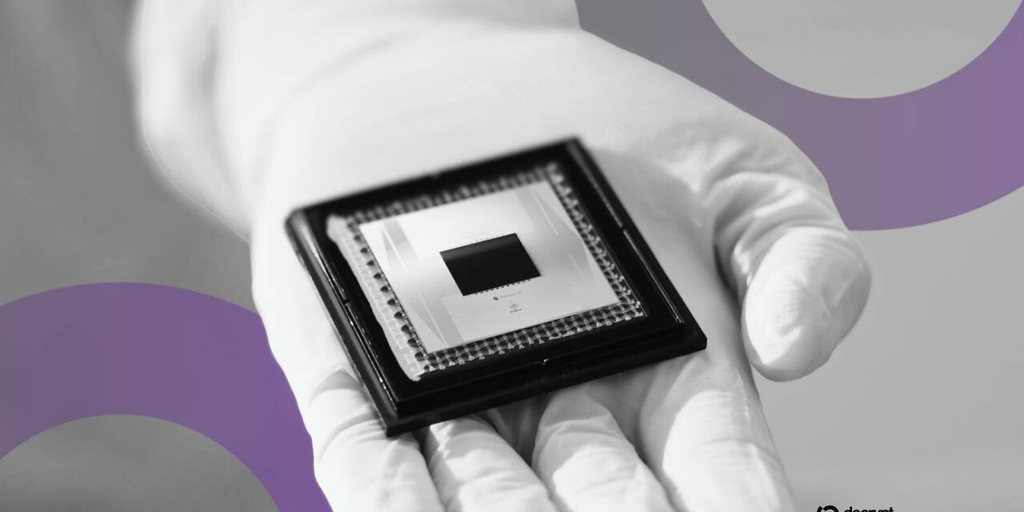
Saudi Arabia just put a stake in the quantum ground. Saudi Aramco has installed a 200‑qubit neutral‑atom system from France’s Pasqal at its Dhahran data center—its first quantum computer and, by Pasqal’s account, the most powerful system the company has delivered so far. Aramco’s stated goals are industrial: energy modeling and materials research. Yet the announcement inevitably revives the question the market can’t resist: does this move Bitcoin closer to a quantum breaking point?
The signal that matters isn’t raw qubits Headline qubit counts often mislead. A 200‑qubit device is small in practical terms because noise and short coherence times cap the number of operations you can run before errors dominate. Researchers like Ian MacCormack have been clear: you’d need error‑corrected logical qubits—on the order of thousands—to execute something like Shor’s algorithm against modern elliptic‑curve cryptography (ECC). Translating that to hardware usually means millions of physical qubits with high‑fidelity gates and robust error correction. We’re nowhere near that regime.
The physics checklist is unforgiving. As Caltech’s team has noted, what matters is the ratio between operation duration and coherence time. If gates take roughly a microsecond and the system remains coherent for about a second, you can sequence around a million operations. That’s meaningful for experiments; it’s not sufficient to mount cryptanalytic attacks on ECC or RSA. Even Caltech’s neutral‑atom platform that reached roughly 6,000 qubits this September remains a research workhorse for simulations and algorithm development, not a cryptography breaker. Google’s 105‑qubit Willow chip sits in the same “interesting but early” bucket.
The real Bitcoin threat vector—and its timeline The credible attack path on Bitcoin is signature forgery. If a sufficiently capable quantum computer could run Shor at scale, it could derive private keys from public keys and authorize transactions you never signed. Justin Thaler has warned about this precise vector. That’s the essence of “Q‑Day”—the hypothetical moment when quantum systems can reliably forge digital signatures. The implications extend well beyond crypto into the fabric of the global security stack.
Where are we relative to that line? Not close. Today’s devices, including Pasqal’s 200‑qubit machine and Willow, remain below the bar. Christopher Peikert has urged a pragmatic posture: quantum computing likely carries a non‑trivial long‑term probability—north of 5%—of becoming a major risk to cryptocurrencies, but it isn’t a live threat over the next few years. That framing is about right. The research curve is bending, but error correction and scale are the gating factors, not press‑ready qubit totals.
Why Aramco’s system still matters This deployment is strategically meaningful even if it doesn’t dent Bitcoin. It pulls Saudi Arabia into the circle of nations—across the U.S., China, the EU, the UK, Japan, India, and Canada—bankrolling national quantum programs and building local talent. It also signals momentum for neutral‑atom architectures aimed at near‑term industrial utility. Pasqal’s CEO, Loïc Henriet, has positioned the machine as a milestone for the region and a step toward delivering practical quantum resources to industry.
There’s also a geopolitical undercurrent. As Yoon Auh has argued, rapid progress and funding surges make eventual breakthroughs plausible, and the appeal for governments goes well beyond cryptanalysis. A widely accessible quantum capability could become a kind of digital power equalizer—hard to gate and tempting to weaponize. That’s precisely why security communities treat these machines seriously even when they sit far from cryptographic thresholds.
How to read the next headlines Markets often overreact to round numbers. A more disciplined watchlist looks like this: - Logical qubits, not physical counts - Demonstrated error correction with low logical error rates - Coherence times relative to gate speeds at scale - End‑to‑end implementations of cryptographically relevant subroutines, not toy demos
For Bitcoin and broader crypto, preparation beats panic. Post‑quantum signature schemes exist, migration research is active, and the industry likely has calendar time before quantum hardware crosses the relevant thresholds. The Saudi system doesn’t change today’s risk calculus. It does, however, add another serious player to a race where the scoreboard is quality and stability, not just qubits.