Russia's President Signs Landmark Digital Ruble Bill into Law
In a groundbreaking move, Russian President Vladimir Putin has officially signed the digital ruble bill into law, granting the country's central bank the authority to issue its own digital currency.


Because Bitcoin
July 24, 2023
In a significant stride towards embracing the digital economy, Russian President Vladimir Putin has signed the digital ruble bill into law, granting the country's central bank the authority to issue its own digital currency. The move marks a significant turning point in Russia's financial landscape, as it seeks to harness the potential of blockchain technology and digital assets.
The digital ruble has been under consideration by the Bank of Russia for some time, and the recent legal developments have now laid the groundwork for its official implementation. Under the newly amended Russia's Civil Code, the digital ruble will join traditional payment methods, offering a seamless and modern means of transacting within the country's borders.
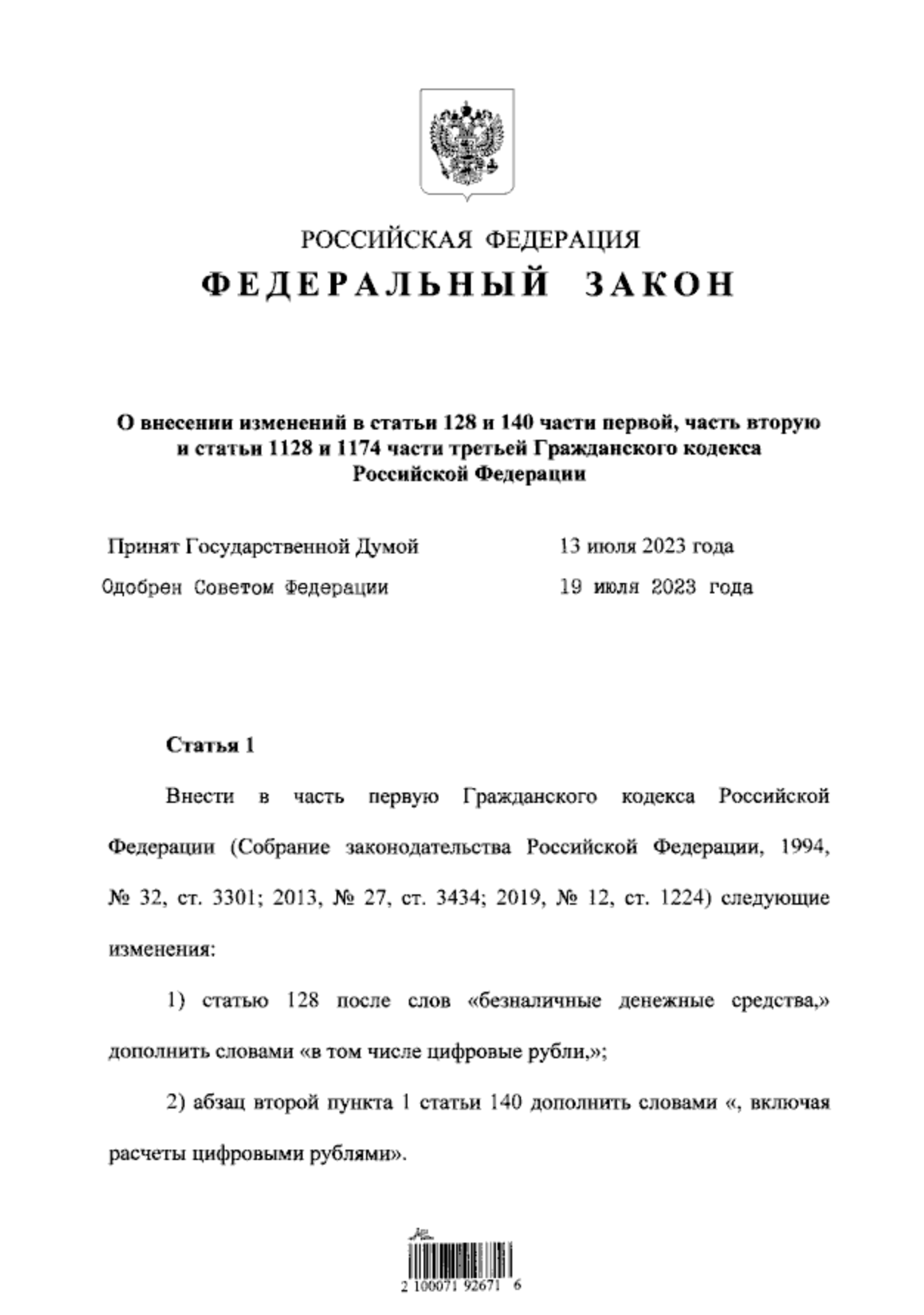
Source: publication.pravo.gov.ru
With the central bank taking charge of managing digital ruble accounts, users can expect a robust and secure platform for their transactions. This centralized approach aims to ensure enhanced regulatory oversight while promoting user confidence in the digital ruble as a legitimate and stable form of currency.
The road to this groundbreaking legislation has been carefully paved through multiple stages. The bill successfully passed its third and final hearing on July 11, gaining approval from lawmakers, and awaited the president's official endorsement before becoming law.
With the digital ruble's inception, Russia envisions a range of potential applications that could redefine its financial ecosystem. One of the primary objectives is to foster greater financial inclusivity, making banking services accessible to a broader segment of the population. By enabling peer-to-peer transactions and reducing reliance on traditional banking infrastructure.
Moreover, this forward-thinking move can also facilitate cross-border transactions, potentially reducing the barriers posed by currency exchange and enabling faster, more efficient international trade.
While the digital ruble bill comes at a time when other countries are exploring their own central bank digital currencies (CBDCs), Russia's commitment to embracing blockchain and digital assets signals a clear intent to remain at the forefront of financial innovation. However, the implementation of the digital ruble will be accompanied by its own set of challenges. Striking a balance between regulatory oversight and maintaining user privacy and security will be critical.
Resources: