Rate-Cut Repricing Drains Crypto ETF Inflows: Bitcoin Leads Outflows as Altcoins Attract Niche Bids
Crypto ETPs shed $1.3B in four days, nearly erasing 2026 inflows. Bitcoin ETFs led $405M weekly outflows as Fed cut odds fade, while XRP, Solana, and Sui drew new capital.

Because Bitcoin
January 12, 2026
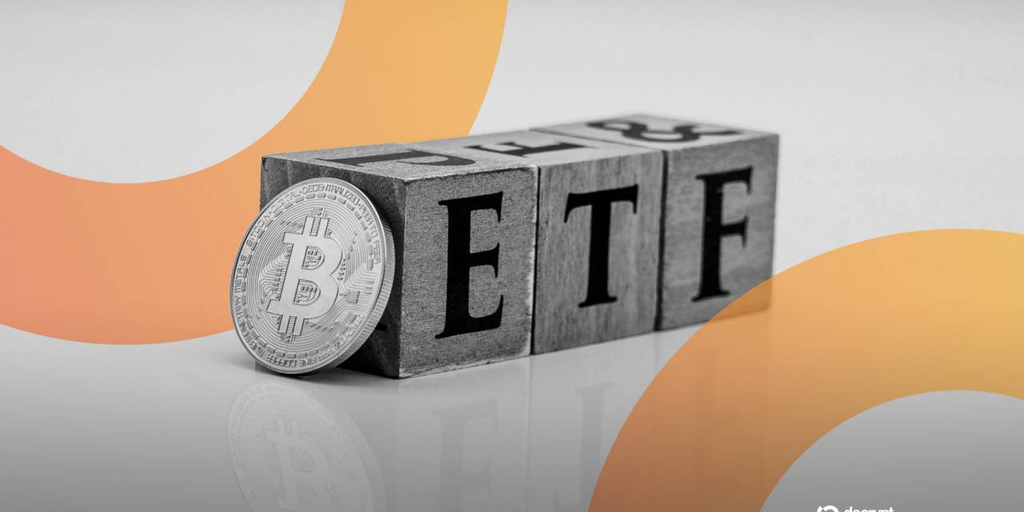
The ETF tailwind that kick-started crypto in 2026 flipped almost overnight. Crypto exchange-traded products surrendered $1.3 billion over a four-day stretch—nearly wiping out the $1.5 billion they had gathered year to date—according to CoinShares. For the last full week, outflows totaled $454 million. Bitcoin funds absorbed the hit, bleeding $405 million, while even short-Bitcoin vehicles saw $9.2 million exit, a quirky pairing that points to positioning de-grossing rather than a clean directional bet. Spot Bitcoin traded near $91,722, up about 1% on the day.
The catalyst is straightforward: a fast reset in rate-cut timing. The next FOMC meeting on January 27-28 is now priced with a 95% chance of no change. Expectations for a March cut have slipped hard—futures a week ago implied a 44% chance; that’s down to 26.2% today, with a 72.7% probability that rates stay unchanged in March. On Myriad, a prediction market, traders still assign a 59% chance of a 25-basis point cut before July.
Here’s the piece worth focusing on: the ETF wrapper is importing TradFi reflexes into crypto. When front-end rate cuts get pushed out, allocators quickly trim their highest liquidity beta—Bitcoin and Ethereum ETFs—because these vehicles are built for instant risk calibration. That’s why four sessions can unwind an entire year’s progress: much of January’s flow was momentum- and calendar-driven, and those flows reverse just as quickly when the macro tape says “wait.” The simultaneous outflows in long and short Bitcoin funds fit with balance-sheet lightening, not conviction—think profit-taking, margin relief, and risk-parity adjustments as VaR rises with stickier policy.
The rotation into altcoins highlights another behavioral tell. XRP, Solana, and Sui funds attracted $45.8 million, $32.8 million, and $7.6 million in new money, respectively. Prices were mixed: XRP and Sui dipped just under 1% to $2.07 and $1.80, while Solana gained 2.2% to roughly $142. That pattern often reflects a search for idiosyncratic catalysts when macro beta looks capped—allocators nibble at narratives perceived as less rate-sensitive. The totals are small relative to Bitcoin’s flow gravity, so it reads as targeted risk rather than a regime change.
For Ethereum, the takeaway mirrors Bitcoin: ETF outflows suggest discretionary de-risking, not necessarily a shift in the long-term thesis. ETF secondary-market flows can diverge from spot and on-chain accumulation for stretches; market makers hedge, redemptions spike, and the optics look worse than the underlying demand.
Tactically, the next move hinges on the path of cuts, not just their destination. If March stays off the table and July odds become the market’s anchor, ETF flows could remain choppy as allocators fade rallies into policy uncertainty. Conversely, any data that nudges the probability of an earlier cut higher tends to reprice duration and liquidity—and crypto is still highly sensitive to that liquidity pulse.
Net: flows can move faster than fundamentals in this structure. If you trade the ETFs, anchor to the rate path and be ready for continued flow volatility into the January meeting. If you’re allocating, recognize the difference between mechanical ETF de-risking and actual deterioration in long-horizon demand. Today’s price resilience around $91.7K, despite fund outflows, is a decent reminder of that tension.