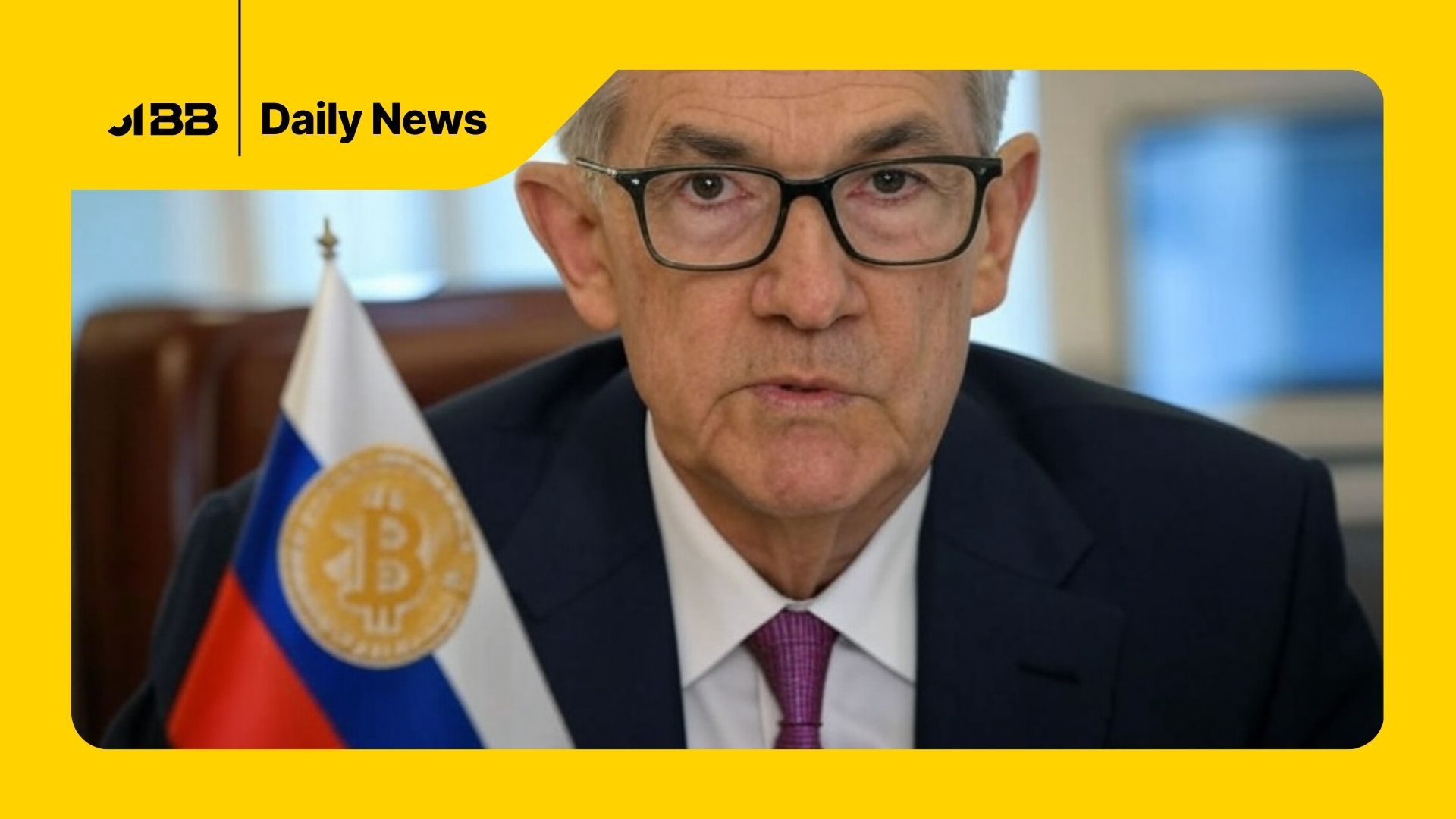
Powell Signals Caution + Russia Tests Crypto for Cross-Border Payments
Bitcoin miners ramp up sales amid trade war pressures, VanEck eyes broader crypto exposure with new NODE ETF, and U.S. regulators face legal pushback as policy shifts stir uncertainty. Meanwhile, Russia tests crypto for global payments after Tether freeze, highlighting rising geopolitical demand for decentralized finance.

Because Bitcoin
April 16, 2025
Bitcoin Miners Sell Over 40% of March Production Amid Economic Strain and Trade War Pressure
Publicly traded Bitcoin mining firms sold over 40% of their mined BTC in March—their largest monthly liquidation since October 2024—marking a shift from recent accumulation strategies. According to TheMinerMag, the move reflects rising economic uncertainty and operational challenges. With Bitcoin down 2.3% in March after a larger February correction, these sales are adding to market volatility. The industry is also facing mounting pressure from U.S. trade policies under President Trump, including tariffs on mining components and energy imports, which could make mining in the U.S. economically unsustainable. Experts predict U.S.-based miners may lose competitiveness to firms in tariff-free regions.

👉CHECK OUT BB PREMIUM
VanEck to Launch NODE ETF Targeting Broader Crypto Economy with Focus on Exchanges, Miners, and Data Infrastructure
VanEck plans to launch a new actively managed crypto-related ETF, ticker symbol NODE, by next month. The fund will invest in 30 to 60 companies connected to the digital asset ecosystem, including crypto exchanges, Bitcoin miners, and data centers. NODE aims to give investors broad exposure to the crypto economy without directly buying digital assets. This is VanEck’s latest expansion into crypto, following its spot Bitcoin ETF (HODL) and filings for Solana and BNB ETFs. NODE will allocate at least 80% of assets to companies and instruments driving digital transformation.
Federal Judge Pauses GOP-Led Crypto Lawsuit Against SEC Amid Leadership Change, IRS Suit Dropped After Trump Veto
A federal judge has paused a lawsuit filed by 18 Republican state attorneys general and the DeFi Education Fund against the U.S. Securities and Exchange Commission (SEC), citing a potential resolution following Paul Atkins’ confirmation as the agency’s new chair. The lawsuit challenges the SEC’s authority in crypto enforcement, arguing it infringes on states’ rights to regulate digital assets. The judge gave parties 30 days to report back and paused deadlines for 60 days. Separately, a lawsuit against the IRS over its DeFi broker rule was dropped after President Trump signed a resolution nullifying the rule, rendering the case moot.

👉CHECK OUT BB TERMINAL
Powell Signals Caution as Fed Monitors Tariff-Driven Inflation Risks and Slowing Growth
Federal Reserve Chair Jerome Powell said the U.S. economy remains resilient but is facing rising uncertainty due to new trade tariffs and shifting government policies. Speaking today, Powell noted that inflation is easing but remains above the Fed’s 2% target, with core PCE inflation at 2.6%. While the labor market is steady, recent data suggest GDP growth slowed in Q1 amid weak sentiment and preemptive import surges. Powell warned that tariffs may drive inflation higher and growth lower, and said the Fed is prepared to wait for greater clarity before changing its policy stance. The Fed will prioritize anchoring long-term inflation expectations while balancing its dual mandate.
Russia Tests Crypto for Cross-Border Payments After Tether Freeze, Eyes Domestic USDT Alternative
Russian regulators have approved experimental use of cryptocurrencies for international payments to bypass difficulties caused by Western sanctions. The move follows Tether’s freeze of wallets on Russian crypto exchange Garantex, which held over 2.5 billion roubles and was recently sanctioned by the EU. In response, officials are considering developing a domestic USDT-like stablecoin pegged to alternative currencies. While the Russian central bank remains opposed to crypto for domestic use, international transactions using digital assets are now actively being tested by local firms.
Resources: