Malaysia uses drones and data to tackle $1.1B power theft tied to Bitcoin mining
Malaysia forms a finance–central bank–utility task force and deploys drones and sensors to curb electricity theft, after 14,000 illicit crypto mining sites and $1.1B losses in five years.

Because Bitcoin
December 4, 2025
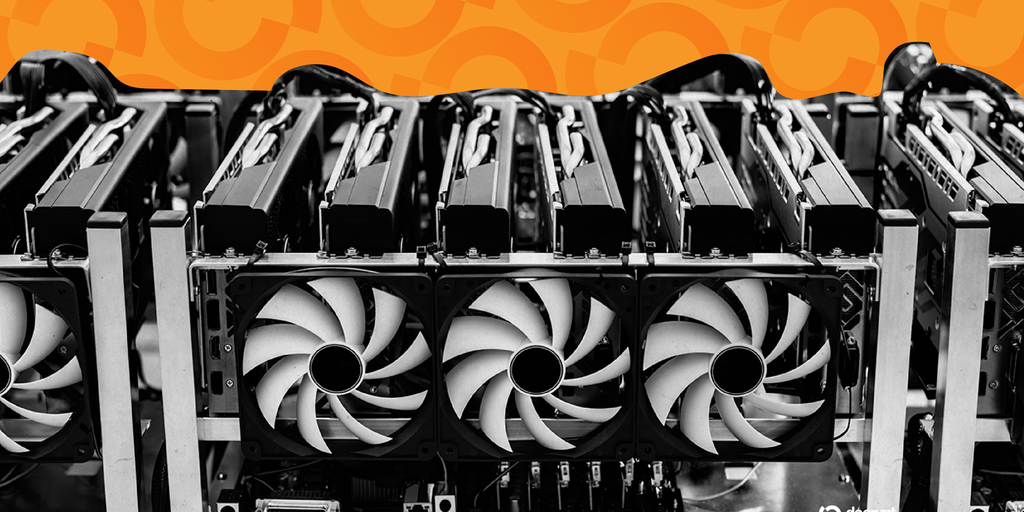
Malaysia is shifting from sporadic raids to continuous grid surveillance. A new interagency task force is flying drones and wielding handheld sensors to pinpoint unauthorized Bitcoin mining that siphons electricity, a practice authorities say has cost the national grid roughly $1.1 billion over five years.
Formed in November, the committee brings together the Ministry of Finance, Bank Negara Malaysia, and national utility Tenaga Nasional Berhad (TNB). It builds on stepped-up enforcement this year, including a May sweep that shuttered nearly 2,400 operations; 45 rigs were seized in the northeast, and a February house explosion in Bandar Puncak Alam exposed another clandestine site. Investigators have uncovered about 14,000 illicit mining setups over the past half decade, with rigs turning up in unlikely venues—from a former logging yard in Sarawak to an unfinished mall overlooking the Strait of Malacca.
Mining itself is permitted in Malaysia when operators buy power legally and pay taxes. The problem is the arbitrage: when electricity is inexpensive and oversight is patchy, some miners rationalize meter tampering as a cost of doing business. Wolfie Zhao, who heads research at TheMinerMag, noted that electricity theft long predates crypto, but mining increases the payoff and has drawn offenders for years—well before 2019, when police famously flattened confiscated ASICs with road rollers. He added that operators often disguise consumption by altering meters, leaving utilities to infer theft only after billing data diverges from actual load over time.
What’s changed is the tool stack. Drones reduce the guesswork by mapping heat signatures and abnormal load patterns at scale, while portable sensors speed on-site verification. For TNB, the equation becomes an analytics problem: triangulate substation-level anomalies, prioritize high-yield inspections, and compress the detection window so illicit uptime—the miner’s only real source of edge—shrinks. The tactic can be unglamorous, but it targets the profit function directly.
The psychology is predictable. Hashprice compresses, miners chase lower inputs. If perceived enforcement lag is months, the payback period on stolen power can look attractive. Move that lag toward days with aerial and meter-level telemetry, and the risk-reward flips. That is why persistent, data-driven monitoring matters more than headline raids.
There’s also an industry hygiene angle. Every kilowatt stolen raises baseline suspicion around lawful operators, increases technical losses on the grid, and shifts costs to households and businesses. When theft jumps from remote sheds to residential blocks—as the Bandar Puncak Alam incident implies—the social license for mining deteriorates quickly. The ethical line is bright in the region: Hong Kong authorities recently arrested two individuals for diverting electricity from care homes for the disabled to run rigs.
The regional pattern is tightening. Thailand this week dismantled a $8.6 million operation linked to Chinese scam networks, seizing 3,462 rigs across six locations. Malaysia’s coordinated approach suggests Southeast Asian regulators are converging on the same playbook: enforcement alliances, sensor-heavy detection, and targeted shutdowns.
If Malaysia wants durable results, three levers tend to work in tandem: - Grid forensics first. Substation and feeder-level anomaly detection, paired with drone thermal imagery, shortens the illicit ROI window. - Compliance pathways. Clear registration, tax clarity, and predictable tariffs reduce the temptation to cut corners for operators willing to be legal. - Consequence certainty. Swift penalties for meter tampering—applied consistently—change behavior more than occasional headline seizures.
Legitimate miners should read the signal: treat compliance with TNB as a design constraint, not an afterthought. In this market, access to stable, transparent power beats a few months of “free” electricity every time.