Krugman Calls Bitcoin a “Trump Trade” Unwinding as Polls Shift—But Narrative, Not Fundamentals, Is Doing the Work
Paul Krugman links Bitcoin’s drop to fading Trump momentum. Price, polling, trade-war shocks, and prediction markets point to a narrative-led correction, not a broken thesis.

Because Bitcoin
November 27, 2025
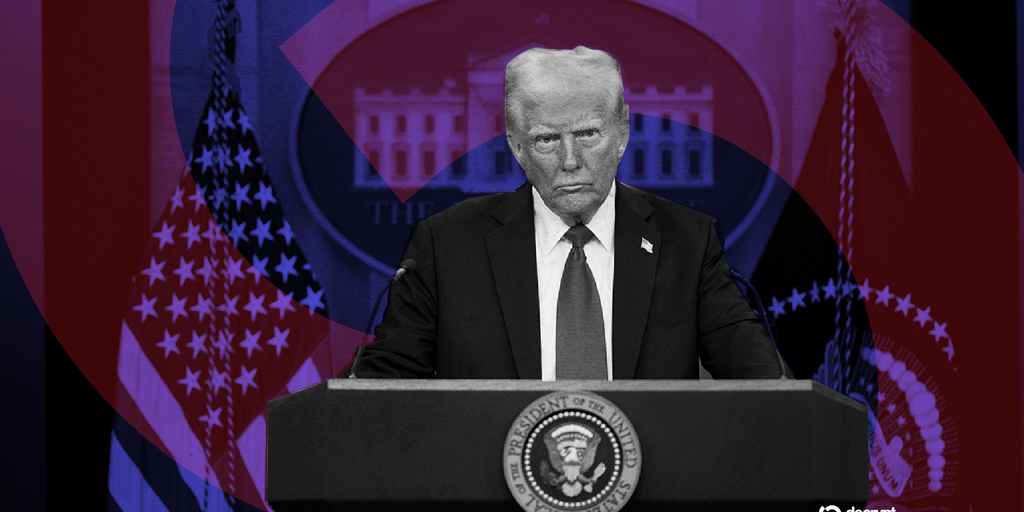
Bitcoin’s pullback has a new villain, at least according to Paul Krugman: sliding Trump poll numbers. The Nobel laureate argues the market has treated BTC as a high-beta wager on Trump-era crypto friendliness—and that as the “Trump trade” cools, so does Bitcoin. The view is sharp, provocative, and partially right. It also misses how narratives, not first-order fundamentals, are steering near-term price.
In a Substack post this week titled “The Trump Trade is Unraveling,” Krugman—who has long been skeptical of Bitcoin’s utility—claims declining support for President Donald Trump is weighing on BTC. He frames Bitcoin as effectively a bet on “Trumpism,” writing that “Trump’s power is visibly diminishing, so the price of Bitcoin…has plunged.” He further alleges that Trump’s family “has in effect received massive bribes from the crypto industry” and says a weakened president would be less able to advance pro-crypto policies. Krugman also reiterates his core critique: Bitcoin isn’t functioning as money or as a reliable inflation hedge, and it trades more like a levered tech stock.
There’s a reason this thesis resonates. Trump’s return to office and public embrace of digital assets were widely cited as catalysts for this year’s rally. The “Trump trade” shorthand captured a simple mechanism: traders bought BTC on the back of an election win and policy signals, and price strength accelerated. Bitcoin climbed on the eve of Trump’s victory, then surged again after the inauguration. The optics reinforced the link: Trump campaigned on aiding the digital asset industry, crypto industry figures donated to his campaign, his sons drew controversy for profiting from various crypto ventures, and the president even launched a Solana-based meme coin—Official Trump—days before entering the White House.
Yet 2025 showed how quickly a political premium can be repriced when macro risk intrudes. Despite pro-crypto laws, the administration’s trade war introduced destabilizing shocks. On October 10, following a threat against China, crypto markets saw a record $19 billion in liquidations. That kind of forced deleveraging compresses risk appetite across the board and decouples short-term price from any one policy narrative.
Where are we now? Bitcoin recently traded near $90,348 (CoinGecko), down roughly 30% from October’s all-time high at $126,080. Some analysts say a bear market may be developing after BTC tagged a seven-month low near $81,000 last week, though price has since recovered part of the drawdown. Interestingly, crowd expectations have not collapsed: users on Myriad—a prediction market run by Dastan—currently assign a better-than-70% chance that the next big move is up to $100,000 rather than down to $69,000.
Here’s the deeper read: the “Trump trade” is less a clean causal channel and more a reflexive narrative that coordinates positioning. Polls shift, traders de-risk, liquidity thins, and options skew migrates—price then validates the story. When expectations of regulatory accommodation rise, capital rotates into BTC; when geopolitical risk spikes or polling narrows, that premium compresses. The critical driver isn’t whether Bitcoin “is” a Trump asset; it’s that political probabilities set the discount rate for perceived future crypto cash flows (exchange profitability, onshore liquidity, venture exits), and those probabilities are volatile.
Krugman’s utility critique largely sidesteps this dynamic. Bitcoin’s role as a medium of exchange or inflation hedge remains debated, but its investable thesis today is clearly tied to policy clarity, market structure, and the credibility of U.S. institutions to host crypto capital. That’s why trade-war shocks matter more than a meme coin, and why allegations about influence—however one interprets them—are less explanatory than the risk regime traders are pricing.
What to watch next: - Policy path vs. poll volatility: If polls steady and legislative follow-through persists, the political premium can rebuild. If the trade war escalates, macro will dominate. - Positioning and liquidity: After October’s $19 billion liquidation event, the market is more fragile; small flows can move price. - Crowd vs. tape: Myriad’s >70% leaning toward $100,000 shows residual optimism. If realized volatility stays elevated, that confidence will get tested.
Bitcoin’s recent slump looks like narrative compression amplified by leverage and geopolitics, not a final verdict on its long-term adoption. Political narratives come and go; the market’s job is to continuously reprice that probability tree.