Kevin O’Leary: Bitcoin Can Reach $1M—Once Crypto Proves It Can Survive the Quantum Test
Kevin O’Leary sees Bitcoin at $1M if crypto neutralizes its quantum-computing risk, reshapes tokenization, and wins over institutions. Here’s the real hurdle he’s fixated on.

Because Bitcoin
September 18, 2026
Bitcoin’s price action may be lively—$81,229 at last check, up 5.1% on the day with a $76,205–$81,213 intraday range and roughly $1.8B in volume—but Kevin O’Leary is anchoring the long-term conversation elsewhere: credibility under quantum pressure. His seven-figure target comes with one condition—crypto must demonstrate it can withstand “Q-Day,” the hypothetical moment when a sufficiently advanced quantum computer can forge signatures and compromise wallets. Until that doubt is cleared, he argues, institutions will continue to cap exposure, often around 3%, treating Bitcoin more like a gold slice than a core position. A recent Google research paper hinted the risk window could arrive sooner than optimistic timelines suggest; others place it in the 2030s or say it may never materialize. The uncertainty is what stalls sizing.
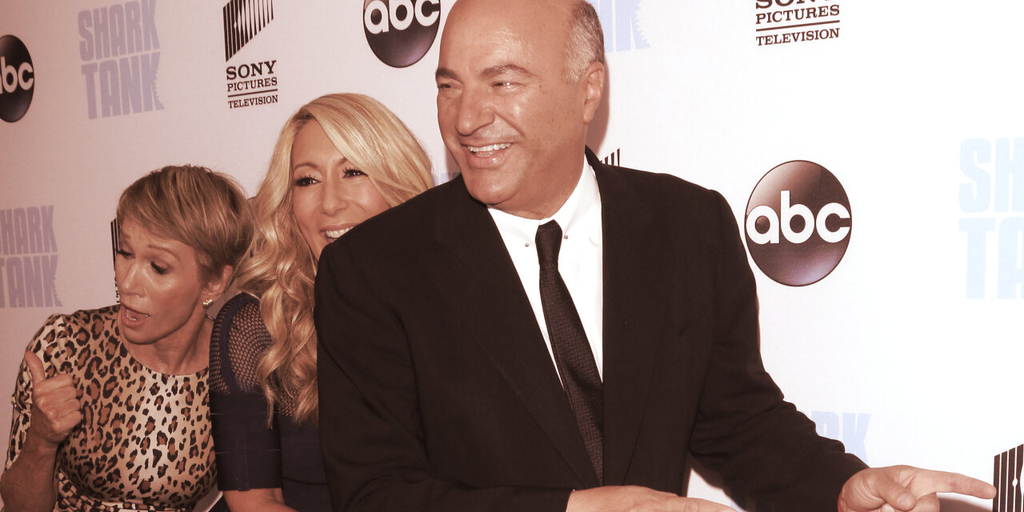
He made the case at Avalanche Summit in New York, where he wore a $11 million Shohei Ohtani 1-of-1 card—encased by Tiffany with 110 carats of diamonds and 2.2 pounds of white gold—literally around his neck. The flex wasn’t just theater. It underlined his view that high-value collectibles, and more broadly real-world assets, belong on-chain. That stance aligns with the U.S. SEC’s new Innovation Exemption, which permits approved venues to trade tokenized stocks. In his words, “digitization” will function like a twelfth S&P sector because it services the other eleven.
The broader thesis he’s revising is just as important. Eighteen months ago, he believed owning Bitcoin and Ethereum captured roughly 97% of crypto’s volatility as the market standardized on ETH. He now doubts that consolidation path. In his view, specific industries will align with the first exchange-grade chain they integrate for tokenization. If a major bourse chooses a particular L1 to settle equity tokens, liquidity gravity does the rest and that network’s asset could re-rate sharply, leaving other chains disadvantaged. He no longer expects Ethereum to be the default; he questions its speed and security for that role—his opinion, as he put it.
What would it mean to “solve” the quantum overhang for Bitcoin? Not marketing, but mechanics: - A credible, widely vetted path to post-quantum cryptography (PQC) at the protocol and wallet layers. - Clear incentives and tooling for institutions and retail to migrate keys safely, minimizing legacy address exposure. - Custodian readiness, with attestations, incident response, and regulator-acceptable controls. - Measurable progress: testnets, audits, and staged cutovers that reduce tail risk without fragmenting the network.
That migration won’t be trivial. It touches miners/validators, exchanges, hardware wallet vendors, and governance. It also raises fairness questions: how to protect less sophisticated holders whose key practices expose them more? A rushed, opaque rollout could fracture trust; a transparent, opt-in, well-incentivized plan could do the opposite—unlocking larger allocations and, by O’Leary’s logic, reopening the path to $1 million.
His portfolio discipline frames the stakes. He caps single positions at 5% and sectors at 20%, though crypto has run as high as 23% in his book over seven years. Institutions live by similar guardrails, and quantum ambiguity is the line item compliance teams lean on to justify small weights. Some investors are hedging by funding early quantum-security software efforts, including on-chain plays, but those are side bets until Bitcoin itself publishes and executes a PQC roadmap.
O’Leary’s “don’t pick the model, buy the grid” approach in AI parallels his updated crypto stance. He owns BitZero, a former Bitcoin miner turned Nasdaq-listed power company with land, fiber, and permits in Norway and Finland, plus private power projects in Alberta and Utah. For the first time, he’s long uranium, positioning for small modular reactors likely headed to U.S. data centers. If computation and tokenization scale, power becomes the constraint—so he’s buying the constraint. He’s also unabashedly accelerationist: no AI slowdown, global competition guarantees the pace, and he plants himself in the “cure cancer” camp.
On policy, he doesn’t expect the Clarity Act—intended to settle which U.S. agency oversees crypto trading—to move before the midterms. A bipartisan version could reemerge after.
For market timing obsessives, prediction platform Myriad pegs a 73% chance that BTC trades between $80,000 and $82,000 both today and this week. That’s noise relative to the structural unlock O’Leary is pointing at. If Bitcoin can credibly demonstrate quantum resilience—and if tokenization rails pick winners in public—it changes the compliance memo inside asset managers. That’s when caps relax, not because of a meme, but because the risk line item got solved.