Is The Total Bitcoin Miner Capitulation Coming Soon?
BTC miners are bracing for further volatility as bankruptcies, lawsuits, financial distress and weather-caused electrical disruptions put the spotlight on the troubled industry


Valentin
March 11, 2023
As the second order effects of FTX’s fallout continue to unwind, many of the overall macro forces that’ve been driving markets down since the beginning of the year have now exacerbated as a result of the contagion effect sparked by the demise of the fraudulent crypto-exchange.
These ongoing forces have caused turmoil among different sectors within the crypto ecosystem, not only those who were directly related to exchanges, but other institutions which rely on crypto prices remaining high in order to enhance their competitiveness and mentain high margins, have been sufering the effects of the current market conditions.
Bitcoin Miners
The Increasing cost of capital, along with rising energy prices, inflation, and a looming recession, have put pressure on many businesses within different industries around the world, and Bitcoin miners have not been the exception, as mining companies are finding it no longer profitable to mine BTC.
Bitcoin mining has become an increasingly difficult task, given that upward pressure in energy prices coupled with extreme volatility and declining prices in crypto assets, miners simply can’t make a profit, let alone recover the costs.
As a result, hash price has fallen significantly. Hash price is one of the most popular economic metrics for miners to track, even though few people outside of the mining sector understand it. In short, this metric represents the dollar-denominated revenue expected to be earned per marginal unit of hash rate.
Furthermore, the sub-freezing temperatures across the U.S, has caused crypto miners to voluntarily cut or entirely shuttered operations to alleviate stress on struggling power grids. This has contributed to the Bitcoin mining hash rate plunging.
According to Glassnode data, Bitcoin’s hash rate tumbled to 156.36 EH/s on Dec. 24 from 252.98 EH/s on Dec. 21.
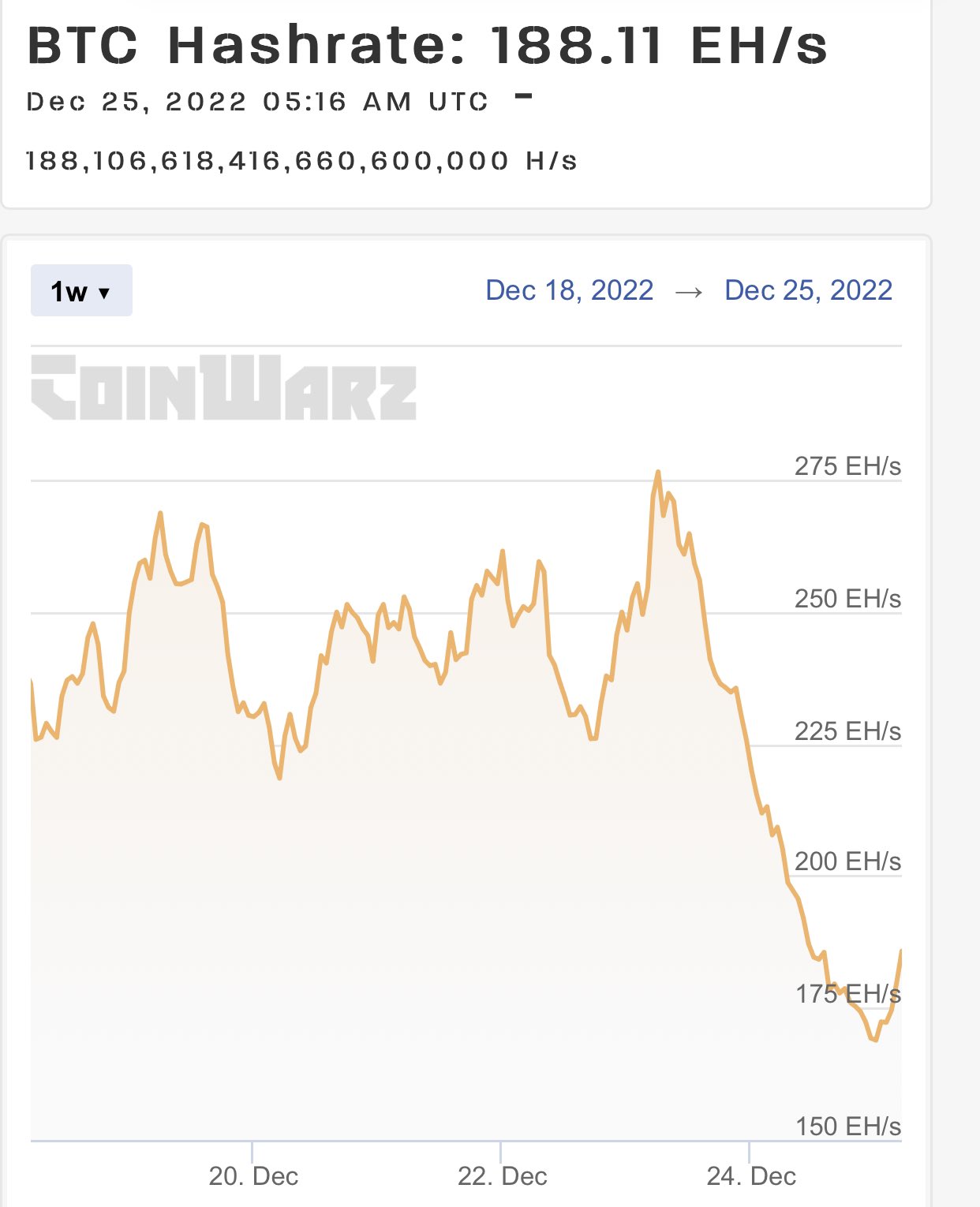
This was the most significant daily drop since summer
The plunging hash rate for Bitcoin indicates fewer mining operations were online to mine and process transactions on the blockchain network. Some of the miners that went offline were Riot Blockchain and Core Scientific.
Mining companies in general are often considered to be a high-beta investment in bitcoin, meaning when bitcoin goes up, mining stock prices go up more. But this market dynamic cuts both ways, and when bitcoin falls, the downside for mining stocks is even more brutal. The bar chart below shows the massacre these stocks have endured.
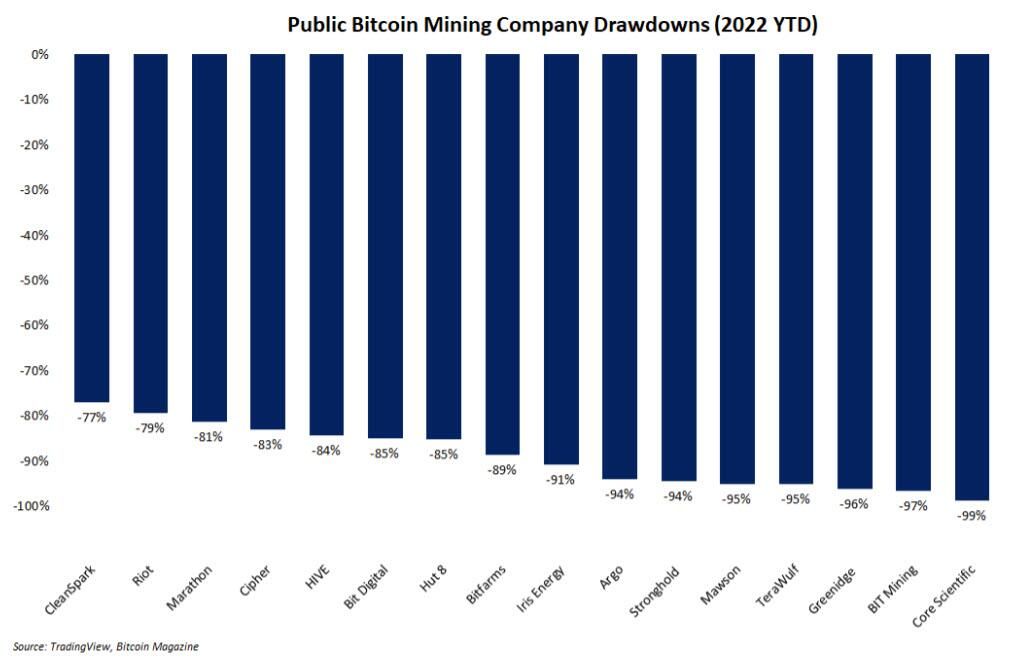
This massive drawdown has naturally shed light on the fragility of the system. Core Scientific, the largest public bitcoin mining company by hashrate, has recently declared bankruptcy after experiencing financial difficulties for an extended period of time,
Bottom line
In short, boom and bust cycles are a natural series of events for any properly functioning market and the bitcoin mining sector is no exception. For the past year, mining has seen its weaker, unprepared operators weeded out as the excesses from the bull market are brought to account.
Now, in the depths of a bearish period, the real builders can continue to expand their operations and build a solid foundation for the next phase of euphoric bullishness.