IREN Stock Drops as AI Cloud Overtakes Bitcoin Mining Amid Heavy Impairments
IREN’s AI cloud revenue topped Bitcoin mining for the first time, but steep conversion costs drove a $684M quarterly loss and an 8% after-hours stock slide.

Because Bitcoin
August 28, 2026
Investors just got a clear signal that IREN’s business is no longer driven by hash rate. AI cloud revenue hit $70.5 million in the fiscal fourth quarter, surpassing Bitcoin mining at $66.7 million and representing 51.4% of sales. The pivot came with a price: a $684 million quarterly loss, including $450.4 million of impairments tied largely to retired mining hardware and another $127.2 million in write-downs and losses on equipment held for sale or disposed of. Shares fell 8.2% after-hours to $37.19 from a $40.53 close.
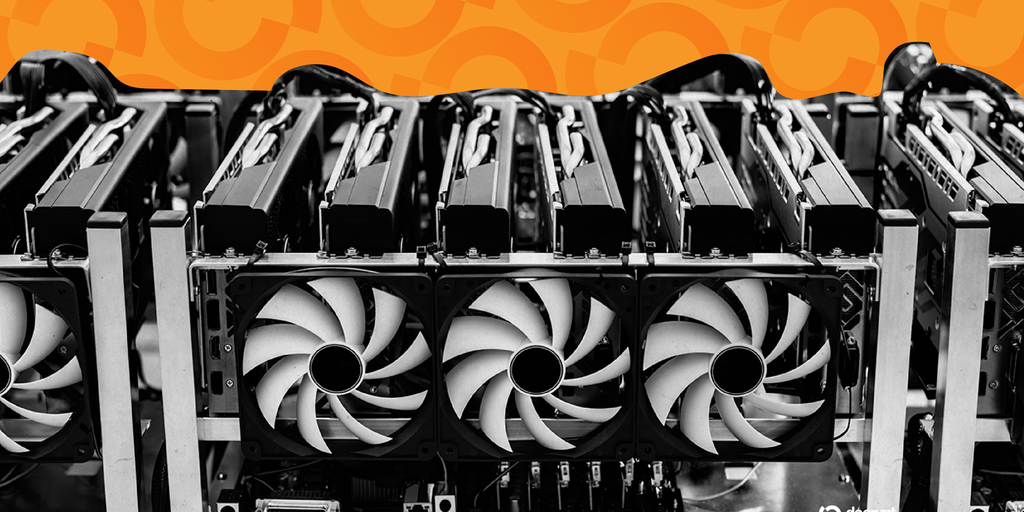
Here’s the real story: the economics of swapping ASICs for GPUs. Converting mining campuses into AI data centers is capital-intensive and operationally messy, especially at speed. IREN’s total revenue dipped 5% to $137.2 million as mining revenue fell 40% quarter over quarter during conversion, even as AI cloud revenue doubled from $33.6 million in the prior quarter. Adjusted EBITDA slid 68% to $19.2 million from $59.5 million as the company hired ahead of growth and absorbed ramp costs—classic bridge pain when a compute utility tries to turn contracted megawatts and racks into billable GPU hours.
Management is betting the contract stack offsets that pain. IREN reported $4 billion in contracted annualized run-rate revenue scheduled to operate by year-end, with $1 billion already live as of August 26. To fund the build, the company secured $6.4 billion in GPU financing, including $3.6 billion at a 6% weighted-average interest rate tied to a five-year, $9.7 billion AI cloud agreement with Microsoft. Microsoft prepayments plus the financing cover 96% of related costs, and another $2.8 billion will support other customer deployments. In May, IREN also signed a $3.4 billion, five-year managed GPU services deal with Nvidia, part of a plan to deploy up to 5 gigawatts of AI infrastructure.
This transition reframes IREN from a cyclical miner to a contracted compute provider. That changes the risk set. Utilization becomes the KPI; power efficiency, latency, and uptime push to the foreground; and contract concentration matters as much as network difficulty once did. If deployment timelines slip or utilization lags, fixed obligations—interest at 6% on a multi‑billion GPU stack—can pressure cash flow. If the ramp holds, contracted ARR can compress payback periods and smooth earnings volatility that often whipsaws pure-play miners around halving cycles.
On the cultural side, investors who anchored on coin-denominated production now have to price data center execution: queue times, software orchestration, and multi-tenant SLAs. Some will welcome it; others may prefer the cleaner beta of hash price. Bernstein’s view that IREN winds down Bitcoin mining by 2030 tracks with the asset impairments already recognized and the clear reallocation of power, land, and capex toward AI workloads.
For the year, revenue rose 41% to $707 million, but $638.8 million in impairments drove a $702.6 million loss, versus an $86.9 million profit in fiscal 2025. Co-founder and Co‑CEO Daniel Roberts framed the pivot as meeting explosive AI demand constrained by physical infrastructure—an observation that fits the current market for scarce, power-dense GPU capacity.
What I’m watching next: - How fast the $4 billion ARR converts to recognized revenue and cash - Utilization rates and churn as Microsoft and Nvidia workloads scale - Power expansion milestones toward the 5 GW target - The pace of mining wind-down versus potential BTC cycle tailwinds
IREN isn’t abandoning crypto so much as monetizing the same energy and real-estate footprint with higher-dollar, contract-backed compute. That can work—if the ramp executes cleanly and the balance sheet stays flexible.