Bitcoin Miner Hyperscale Shuts Michigan Site, Retools for 20MW AI Tenant in Deal Targeting $1.2B+
Hyperscale Data ends Bitcoin mining in Michigan to host a 20MW AI client. A 20-year path with extensions could exceed $1.2B, and a 32MW option may lift revenue above $3B.

Because Bitcoin
September 4, 2026
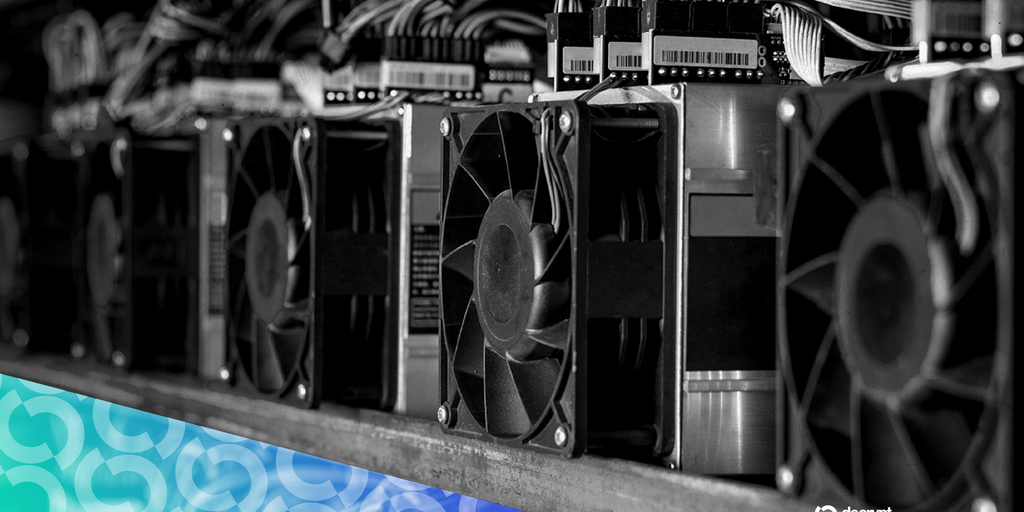
A growing number of Bitcoin miners are redeploying power toward AI infrastructure. Hyperscale Data just made its move: the company halted Bitcoin mining at its Michigan facility on September 1 to clear the deck for a single AI customer under a long-term contract that could surpass $1.2 billion over 20 years.
Here’s the structure that matters. The initial term runs 10 years for 20 megawatts dedicated to an unnamed California-based AI cloud provider, with two optional five-year extensions that, if exercised, bring cumulative revenue above $1.2 billion. The customer also holds an option to add 32 megawatts within the first two years; if that expansion and both extensions are taken, Hyperscale’s total contract revenue could exceed $3 billion.
Management said the immediate shutdown concentrates power and infrastructure upgrades on AI readiness. The company plans to sell its Bitcoin mining servers and expects gains from those asset sales. It has not provided a start date for AI operations, and the change only affects the Michigan site.
Why this pivot makes sense - Power monetization: In mining, revenue rides on hashprice volatility; in AI colocation, contracted megawatts convert into steadier cash flows. Locking in a 10-year anchor tenant with multi-stage options effectively transforms a commodity-exposed power user into a quasi-utility with embedded growth. - Optionality vs. capex: The 32MW expansion option shifts timing risk to the customer while creating upside for Hyperscale if AI demand persists. The trade-off is retrofit cost—high-density compute, cooling, and networking are capital-intensive. Selling ASICs helps recycle capital, but conversion budgets can escalate quickly. - Valuation psychology: Data center businesses often trade at higher revenue and EBITDA multiples than miners. Hyperscale’s CEO signaled an expectation that a larger share of contracted power will help narrow what he views as a discount to peer data center valuations. That may take hold if investors believe the tenant sticks, options get exercised, and utilization remains high. - Execution risk: There’s no launch date yet. Fit-out timelines, utility interconnects, and permitting can drag. Extensions are at the customer’s discretion, so headline “20-year” revenue is contingent. Counterparty concentration also matters when one tenant anchors the site.
Context from the sector - Other miners are making similar conversions as AI demand soaks up capacity. Earlier this year, a leading digital asset researcher argued miners are effectively “sitting on a gold mine” of power and real estate that can be repurposed for AI workloads. - The pivot is not free. IREN’s latest quarter showed AI cloud revenue outpacing Bitcoin mining for the first time, but it also booked $450.4 million in impairments, largely on retired mining rigs—an illustration of transition costs that can overwhelm near-term P&L even as mix improves.
Macro backdrop and what to watch Bitcoin’s spot price context remains constructive—recently around $81,202, up 5.22% over 24 hours, with a $76,975–$82,108 intraday range and about $1.6 billion in volume. Prediction markets were assigning roughly a 70% chance of BTC trading below $82,000 by day’s end and 64% for the week. If more miners reallocate watts to AI, hash rate growth could cool at the margin, potentially improving economics for those who stay purely on-chain.
For Hyperscale, three indicators will tell the story: 1) Retrofit timeline and cost discipline relative to contracted revenue per MW. 2) Proceeds from server sales and how efficiently they fund AI buildouts. 3) Customer behavior—whether the 32MW option is taken and if the two five-year extensions are exercised.
The ethical trade-off is subtle but real: shifting energy from securing an open network to powering centralized AI. At 20MW, the network impact is negligible, yet if this pattern compounds across the industry, it may reshape incentives on both sides. The market, for now, appears to be paying higher multiples for contracted AI power than for volatile hashprice, and boards are responding accordingly.