Galaxy Unveils $100M Long/Short Crypto Fund, Pairing Tokens With FinServ Equities as BTC Slips
Galaxy will roll out a $100M long/short fund in Q1 2026, capping token exposure at 30% and leaning on financial services equities, as Bitcoin trades near $88,375.

Because Bitcoin
January 21, 2026
Galaxy is leaning into dispersion. The firm plans to launch a $100 million hedge fund in Q1 2026 that can go long and short, with up to 30% in crypto tokens and the balance in financial services equities expected to be reshaped by digital asset technology and regulation. Commitments have come from family offices, high-net-worth investors, and institutions; Galaxy has seeded the vehicle, though the size wasn’t disclosed, and the final raise could exceed $100 million.
The structure is the tell. A 30% token sleeve concentrates on what Paul Howard at Wincent calls the true alpha: bringing financial services on-chain and threading digital assets into existing businesses. He argues a focused basket of tokens with clear traction and real-world integrations—stablecoin infrastructure, tokenized assets rails—beats a scattershot coin list. The equities side then expresses the adoption curve: beneficiaries, laggards, and incumbents that either become distribution for crypto or get disintermediated by it.
Timing is deliberate. Bitcoin sits around $88,375, down 3.1% on the day and 7.1% over the week, with the “up only” phase potentially fading, per fund head Joe Armao, even as he remains constructive on Bitcoin, Ethereum (ETH), and Solana (SOL). He notes BTC can’t be ignored if the Federal Reserve keeps cutting and broader risk assets and gold hold up. Yet markets are digesting geopolitics: Bitcoin slipped from $95,000 after Trump threatened 10% tariffs on eight European countries opposing U.S. control of Greenland, slated to begin February 1 and rise to 25% by June 1. Europe signaled retaliation, with the European Parliament considering suspending approval of the July U.S.-EU trade deal.
Price discovery looks more probabilistic than trending. On prediction market Myriad—owned by Dastan, parent of Decrypt—users now assign a 70% chance that Bitcoin’s next leg hits $100,000 before $69,000, down from 84% earlier in the week. QCP Capital frames BTC as trading like a high-beta risk asset, highly sensitive to rates, geopolitics, and cross-asset volatility, and says crypto could remain reactive rather than directional until policy signals clarify.
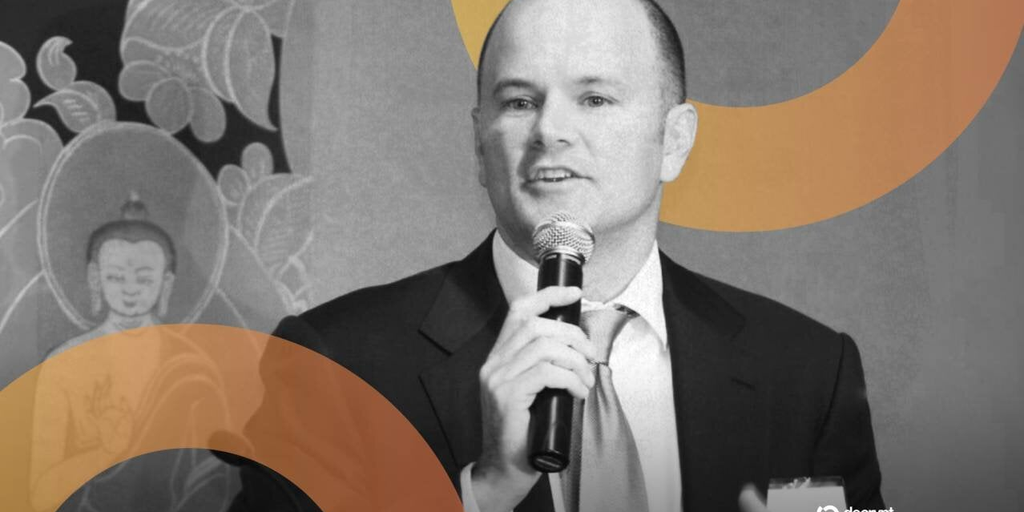
Mike Novogratz captured the mood: gold’s strength and long bond weakness suggest reserve currency erosion, while Bitcoin is still “met with selling.” He wants BTC back above $100,000 to $103,000 to reclaim momentum—something he thinks can happen over time. His July call for $150,000 in 2025 has not played out, with an October peak at $126,080. Even so, balance sheets keep buying: Michael Saylor’s Strategy just purchased 22,300 BTC for $2.1 billion, one of its largest adds in nearly a year.
What makes Galaxy’s approach interesting isn’t the headline size; it’s the cross-asset toolkit. A long/short book straddling tokens and listed financials can monetize the adoption gap: own the enablers, fade the pretenders, and hedge liquidity shocks with highly tradable equities. The 30% cap on tokens disciplines risk, reduces operational overhead, and acknowledges that equity proxies can sometimes express on-chain theses with cleaner execution and better borrow. It also aligns with how institutions often want to step into crypto—exposure with guardrails, measurable factor loadings, and clear governance.
Armao says the fund can profit from “winning and losing companies,” and that’s the real edge here: playing disruptors and themes across financial services, not just the coins themselves. In a regime defined by rate path uncertainty and tariff brinkmanship, that dispersion-first lens is likely where consistent alpha lives.