Fed’s First Hike Since 2023 Underscores Independence; Bitcoin Pops Toward $76K
The Fed raised rates 25 bps to 3.75%-4% with unanimous FOMC support. Odds were 93% pre-meeting. Bitcoin briefly jumped to $76K as oil tops $100 and inflation re-accelerates.

Because Bitcoin
September 16, 2026
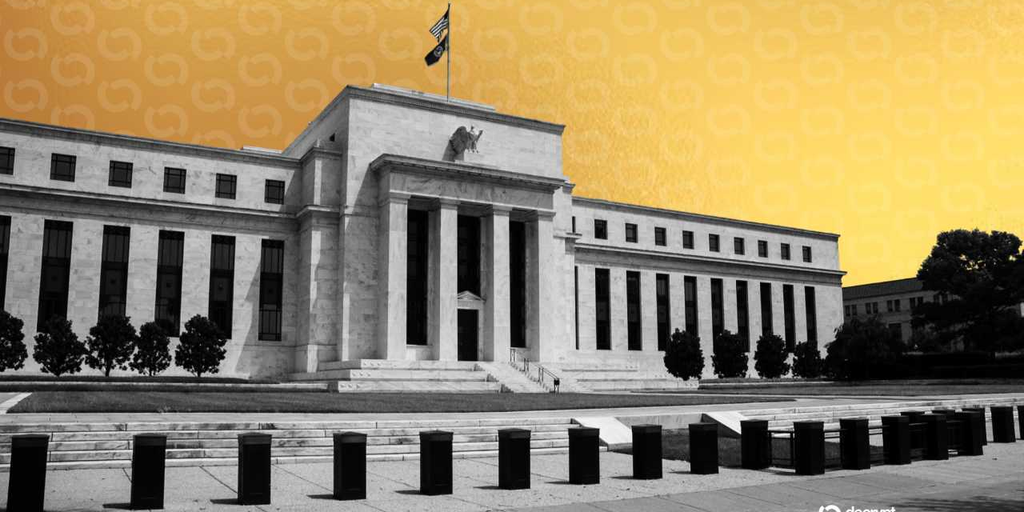
The Federal Reserve chose credibility over comfort. In its first increase since 2023, the FOMC lifted the federal funds target by 25 basis points to 3.75%-4.00%, a move markets had largely assumed. Bitcoin barely budged into the release, oscillating near $75,200, then popped toward $76,000 before easing—while the broader crypto complex slipped roughly 2.18% on the day.
Why it happened - The odds hardened quickly. CME FedWatch implied a 93% probability of a hike heading into the decision, up sharply from under 50% a month ago. - Inflation re-accelerated where it mattered. August PPI climbed 5.4% year-over-year versus 4.8% in July; goods prices rose 1.1% month-over-month, with more than three-quarters tied to energy, per the National Association of Manufacturers. CPI printed 3.4% year-over-year (unchanged from July), but the monthly pace quickened to 0.4% from 0.1%, with gasoline contributing about a third of the move. Core CPI nudged to 0.3% month-over-month from 0.2%. - Energy shock pressure. Oil trading above $100 per barrel for the first time since July—linked to the conflict with Iran—raised the cost of waiting. - Internal momentum. The Fed held at 3.50%-3.75% in July on a 9-3 split, and a stronger-than-expected August jobs report narrowed the Committee’s tolerance for drift.
The vote was unanimous—12-0—with the statement noting activity “expanding at a solid pace,” job gains keeping “pace with the workforce,” and inflation remaining elevated. The Committee argued the move supports a timelier return to its 2% target.
Street expectations fell in line. A Wall Street Journal survey suggested nearly every major bank anticipated a hike, with Barclays, Citigroup, JPMorgan, Morgan Stanley, and UBS looking for 50 bps of total tightening by year-end. Bank of America, Deutsche Bank, and RBC leaned toward 75 bps. Even holdouts shifted: Goldman Sachs and Piper Sandler pivoted to call for a hike after the latest data.
Warsh’s test—and why it matters for crypto risk premia This was Chair Kevin Warsh’s third meeting since his May confirmation, and it cut against what the White House had been pushing. The President had said he wanted “someone who wants to cut rates,” and he and senior officials—including Vice President JD Vance and Treasury Secretary Scott Bessent—publicly argued for easing in the two weeks before the decision. The President even threatened to halt trade with surplus countries if rates didn’t come down. Warsh moved anyway.
That choice is the tell. Markets tend to price a “policy independence premium”—modest at first, then more durable if reinforced. For crypto, that premium shows up as tighter liquidity conditions near term but a cleaner reaction function longer term. When investors believe the Fed will lean against energy-led inflation—even amid political pressure—rate vol compresses and the discount rate applied to long-duration cash flows stabilizes. Bitcoin, which often trades as high-beta liquidity exposure around policy turns, initially snapped higher toward $76,000 before drifting. That knee-jerk upside in a hawkish tape signals positioning lightness into the event rather than a wholesale shift in regime.
Price action and levels that matter - Pre-FOMC: Bitcoin hovered around $75,200, well below the September high near $82,000 and still absorbing Tuesday’s drop after the Clarity Act failed its Senate cloture vote. - Support focus: Traders flagged a $73,500–$75,600 support band. A daily close below it could open $71,000—and even $66,900 on some models—which would unwind the summer rally’s golden cross setup. - Post-print: BTC tested that zone on the headline, spiked toward $75,900, pulled back near $75,100, and ultimately held above the lower edge rather than breaking cleanly. - Sentiment reset: The Crypto Fear & Greed Index slid to neutral at 51 from 69 yesterday—less froth to unwind if macro tightens again.
Altcoins, which tend to be more sensitive to marginal liquidity and regulatory disappointment, underperformed, leaving the total crypto market lower by about 2.18% on the session.
The political crosswinds aren’t trivial Sen. Elizabeth Warren argued that the administration’s own Iran conflict and tariff policies constrained the Fed, forcing a tradeoff that would still cost households via higher credit card and mortgage rates. She also suggested it would take more than one decision to alter her view of Warsh’s independence. That skepticism is rational: independence is earned cumulatively. If the next readings on inflation and growth preserve this stance, the credibility premium increases—and crypto’s macro beta becomes more predictable, even if spot liquidity tightens.
What’s next for policy—and the crypto tape - The Fed meets again October 27-28; the December 8-9 gathering brings the next dot plot and a read on whether today was the last move of 2026 or the start of a short series. - Banks broadly expect another 25-50 bps by year-end, with some houses still penciling in 75 bps total. - For Bitcoin, the path of real rates versus oil will drive the next impulse. Persistently elevated energy keeps miners’ input costs sticky and nudges risk budgets lower; a quick normalization cools the inflation narrative without crushing growth.
For now, the market awarded Warsh a small independence premium and kept Bitcoin anchored above key support. If that combination persists, dips into the $73.5K-$75.6K zone may continue to find sponsorship; lose it decisively, and the door to $71K and $66.9K is open. The reaction function—not today’s 25 bps—will set the trend.