El Salvador Says It Added $100M in Bitcoin; IMF Questions Whether It Was a Purchase
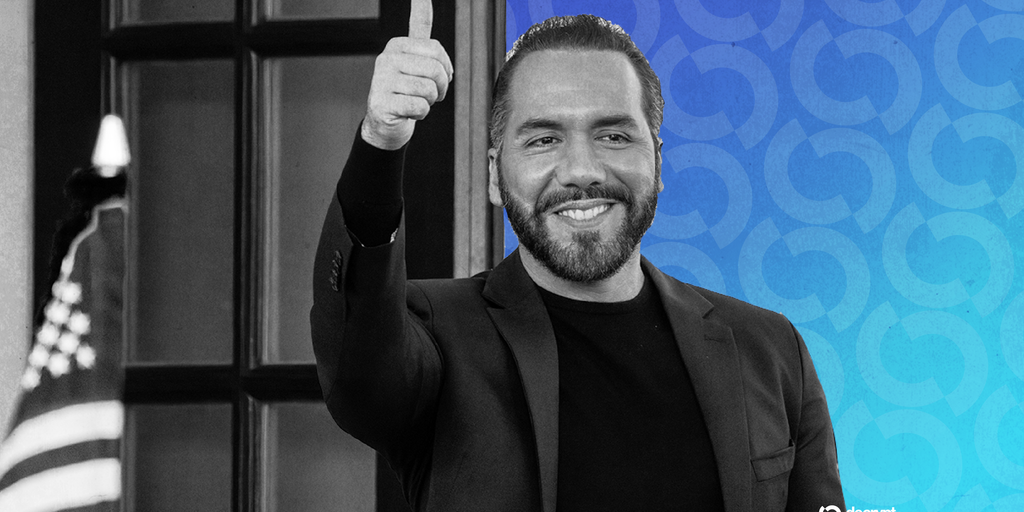
Bukele touted a 1,000 BTC jump—El Salvador’s biggest one-day increase—lifting holdings to ~7,500 BTC. The IMF says it may be internal transfers. The real issue is auditability.

Because Bitcoin
November 18, 2025
El Salvador’s Bitcoin story took another turn after President Nayib Bukele posted “Hooah!” on X and shared a screenshot suggesting the country added roughly 1,000 BTC—about $100 million—near a six-month price low. The dashboard from the government’s Bitcoin Office showed a 17% day-over-day jump, putting the national stash around 7,500 BTC, valued near $698 million. That would mark the largest single-day increase since the program began, and notably, daily inflows exceeding 1,000 BTC only started appearing once the country began publicly sharing its holdings in 2024.
The headline number is less important than the transparency gap it exposes. In September, the IMF told reporters it believed reported increases were internal transfers rather than fresh purchases. A spokesperson for El Salvador’s communications department pushed back, saying buying has continued even as the country agreed to scale back Bitcoin-specific initiatives under a $1.4 billion IMF loan. Those conditions included making Bitcoin acceptance voluntary and reducing the state’s involvement in Chivo, the wallet that once enticed sign-ups with a one-time $30 incentive.
You can see why this is confusing. Screenshots and dashboards shape narrative, but they don’t settle provenance. If a sovereign wants markets to treat these as purchases, the standard should be on-chain: publish receiving addresses (even on delay), sign messages to prove control, and use deterministic UTXO labeling to show acquisition timing and size. A multi-sig structure split across independent public institutions would strengthen governance, while a periodic third-party attestation could balance operational security with public accountability. Without that, even legitimate accumulation can look like balance-sheet reshuffling.
The communications strategy matters because the timing carries signal. Announcing a 1,000 BTC day into weakness—Bitcoin is down 27% from last month’s $126,000 all-time high—plays to a buy-the-dip narrative. When prices peaked, the country’s holdings were worth nearly $800 million; they’ve shed almost $200 million since, per CoinGecko. Last month, Bukele’s shared screenshot showed an unrealized profit near $475 million, a figure no longer displayed on the Bitcoin Office site—another reminder that presentation choices can move sentiment as much as policy.
There’s also a pacing shift. Bukele has periodically disclosed buys of dozens of coins and once vowed in 2022 to purchase one BTC per day when the asset traded around $16,700 after FTX’s collapse. A sudden 1,000-coin jump is a departure from that cadence. Whether it’s a new acquisition strategy, a custodial consolidation, or both, the lack of traceable on-chain evidence leaves room for interpretation. Even traders on prediction market Myriad were split evenly between “Greed” and “Fear,” reflecting how divided the read-through is. (Myriad Markets is a product of DASTAN.)
For a country navigating IMF oversight, market access, and public trust, the cost of opaque accounting can exceed any near-term PR win. The fix isn’t complicated for a crypto-native treasury: adopt a sovereign proof-of-reserves framework, publish batched addresses with lag, and engage an independent auditor to attest balances and flows. That approach respects security while giving citizens, counterparties, and investors a verifiable record. Until then, debates over “purchase vs. transfer” will persist—and the market will price that uncertainty in.