Cryptocurrency Regulation 101
Cryptocurrency is a new asset class relative to the broader financial markets. In the context of regulation, we’re very much in the wild west days where laws around the crypto space are sparse with unclear regulatory distinctions between what is a commodity or security. Forbes recently posted an article titled “Does the Federal Reserve Regulate Cryptocurrencies”, which is quite ironic with the ethos of crypto stemming from a lack of traditional banking services. Nonetheless, scams are a dime a dozen here in the crypto space and regulation will come in one form or another. In this article, we’ll break down the current landscape and how it might evolve going forward.

Because Bitcoin
March 8, 2023
Cryptocurrency is a new asset class relative to the broader financial markets. In the context of regulation, we’re very much in the wild west days where laws around the crypto space are sparse with unclear regulatory distinctions between what is a commodity or security. Forbes recently posted an article titled “Does the Federal Reserve Regulate Cryptocurrencies”, which is quite ironic with the ethos of crypto stemming from a lack of traditional banking services. Nonetheless, scams are a dime a dozen here in the crypto space and regulation will come in one form or another. In this article, we’ll break down the current landscape and how it might evolve going forward.
Why does it matter?
The first question some might ask is: “If crypto is ‘decentralized, why does regulation even matter in the first place?”. Well, we first need to come to an understanding that just because a token is marketed as decentralized, doesn’t mean it’s actually so. Centralization is not binary. There is certainly a spectrum here, which is part of the difficulty in placing regulations in the current state of things. Some projects are far more centralized than others, which is what puts crypto as a whole into the light of regulation. What regulation should aim to accomplish is twofold: put proper rules in place (just like any public company), and ensure that major exchanges are only listing coins which follow the set of rules.
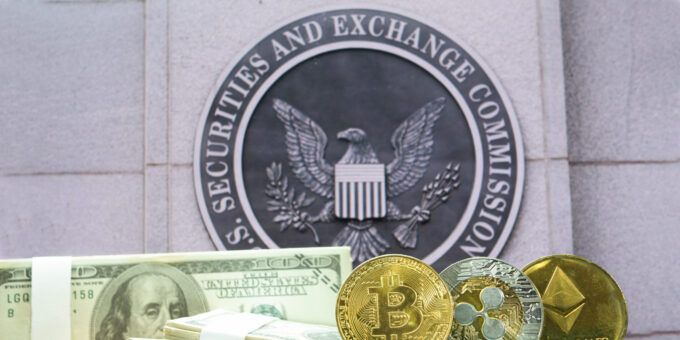
The key regulatory agency overlooking crypto is the SEC or securities and exchange commission. The SEC was founded in the wake of the great depression as a method of regulating the financial markets to hold companies accountable for following a set of rules, once they become securitized to the public. In essence, they look out for fraudsters and make sure they pay the price at the expense of fooling the public markets.
The New Face of the SEC
With the context above, it should be clear why the SEC has their sights aimed at crypto. In April of 2021, Gary Gensler was appointed the new chairman of the SEC. Gensler has a long career in the financial markets and is also no stranger to blockchain infrastructure. In fact, Gensler is likely more educated than a large majority of regulatory powers, so much so that he taught a semester-long course at MIT titled “Blockchain and Money”. The full course is free to watch on MIT’s site and youtube. The first lecture has over 6,000,000 views.

The SEC started cracking down on Ripple (XRP) as the first subject of regulations to come. The trial has been going on for nearly two years and a resolution has yet to be seen. The crux of the case is deciding whether Ripple sold the XRP token as an unregistered security. This will likely be an example of how the other thousands of crypto projects will be looked at under the microscope of the SEC. The Supreme Court determines assets as an investment contract (making them a security) by using the Howey Test.
The Howey Test uses four criteria to determine this:
- An investment of money
- In a common enterprise
- With the expectation of profit
- To be derived from the efforts of others
Are Cryptocurrencies Securities?
Gensler has made one thing clear in his interviews regarding crypto: Bitcoin is a commodity; as for everything else, it is unclear. Bitcoin fails the Howey Test in multiple ways. Firstly there was no true investment of money at the start of Bitcoin and no ICO. Bitcoin traded for zero dollars in the beginning and organically gained a market value when someone famously decided to buy two Papa John’s pizzas for 10,000 BTC. The grassroots way of Bitcoin obtaining market value is akin to past commodity monies of the past. This is unlike most cryptocurrencies who’s creators and developers set an exchange rate per the initial supply.
It’s in the author’s opinion that Gensler is purposefully ambiguous when referring to crypto (besides Bitcoin). www.coinmarketcap.com lists over 20,000 cryptos, which is almost too daunting for an organization like the SEC to handle. On the other hand, Gensler and the SEC team can get creative in multiple ways. The most obvious way at the current time is to put pressure on exchanges. There’s no need to headhunt individual projects when they can regulate the exchanges with significant amounts of liquidity. All in all, the regulatory path forward is not one that’s set in stone.
In conclusion, Gensler said this in a recent CoinDesk interview when asked if crypto’s resemble securities: “They don’t just resemble securities, they are securities”.