Cathie Wood Says Institutions and ETFs Are Rewriting Bitcoin’s Four‑Year Cycle
Ark Invest’s Cathie Wood argues Bitcoin’s halving rhythm is fading as institutional flows and ETFs dampen volatility, tilt BTC risk-on, and challenge 2025 price targets.

Because Bitcoin
December 10, 2025
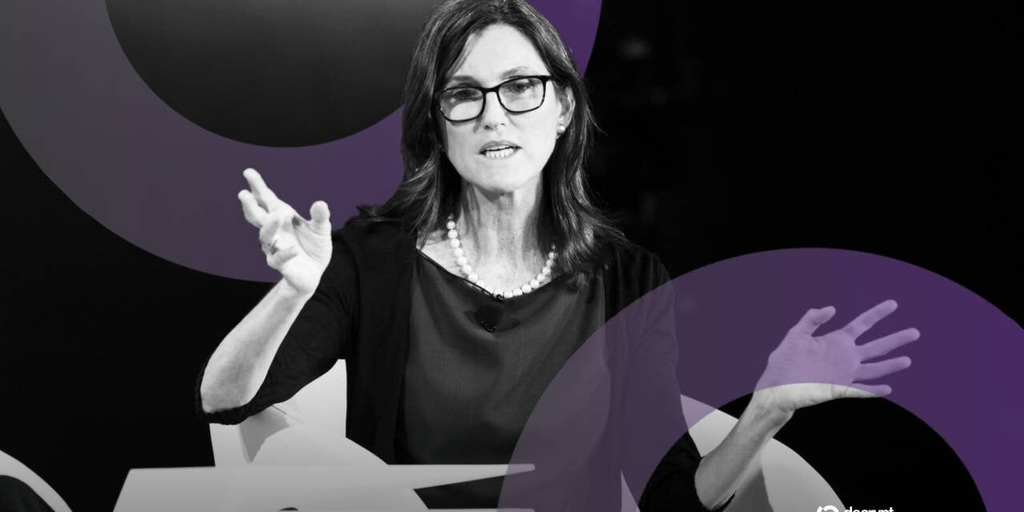
Bitcoin’s supply schedule hasn’t changed, but the buyer has. That, not the halving calendar, is where the market’s regime shift sits. Ark Invest CEO Cathie Wood said Tuesday that Bitcoin’s familiar four‑year rhythm is being “disrupted” as institutions and ETFs reshape demand, reduce tail‑risk drawdowns, and pull BTC further into the risk‑on complex.
Wood’s framing is simple: early‑cycle Bitcoin “regularly dropped 75–90%,” but “the volatility’s going down” as larger, more programmatic participants absorb supply. With block rewards cut again on April 20, 2024 to 3.125 BTC, issuance now competes with persistent ETF and institutional flows rather than retail boom‑bust alone. In her Fox Business interview, she added that institutions “are going to prevent much more of a decline,” suggesting the recent local low may have printed “a couple of weeks ago.”
The identity shift matters as much as the flows. Wood sees Bitcoin behaving more like a risk‑on asset—moving with broader growth assets—after periods when it briefly acted as a hedge. She pointed to episodes such as the European sovereign debt crisis and the 2023 U.S. regional banking turmoil, when BTC occasionally took a defensive bid. Today, she argues, gold has reclaimed the risk‑off mantle, with investors using it as a geopolitical hedge while Bitcoin participates in the “wall of worry” rally. That behavioral split is visible elsewhere: prediction market Myriad—owned by Dastan, parent of Decrypt—currently assigns just a 4% probability that Bitcoin outperforms gold in 2025.
Wood is aligning capital with that thesis. At the end of November, Ark added to positions in Coinbase, stablecoin issuer Circle, and its own Ark 21Shares Bitcoin ETF (ARKB). The message: if ETFs and corporates are the marginal demand, own the rails and the wrapper, not just the coin.
Large banks are converging on a similar takeaway for different reasons. Standard Chartered argued this week that ETF buying renders the classic post‑halving script “no longer a relevant” price driver. In previous eras, prices often peaked roughly 18 months after each halving and then faded; analyst Geoffrey Kendrick said that template doesn’t apply in a U.S. ETF world. The bank cut its 2025 Bitcoin target from $200,000 to $100,000 and expects the new‑regime call to be testable in the first half of 2026.
Where does that leave cycle watchers? The halving still tightens supply, but issuance has become a smaller fraction of daily trading relative to ETF creations/redemptions, balance‑sheet accumulators, and basis traders. That can compress drawdowns without eliminating sharp moves. If ETFs are the new heartbeat, monitor net creations, cash‑in/cash‑out friction, and basis dynamics alongside miner selling and hash economics post‑3.125 BTC rewards. Institutions also bring different incentives—portfolio hedging, quarter‑end optics, and liquidity management—that can smooth declines and, at times, cap upside, depending on flow.
There’s a psychological layer, too. As long as gold absorbs fear and Bitcoin is treated as growth beta, allocation discipline tends to build gradually, not in a manic blow‑off. Myriad’s 4% read on BTC beating gold in 2025 reflects that skepticism. If sentiment remains underweight while structural demand persists, rallies can climb on disbelief rather than euphoria.
Disrupted cycle doesn’t mean no cycle; it means the clock is migrating from protocol supply to capital flows. That’s a healthier place for an asset transitioning from ideology to institutions—so long as participants respect that ETFs can stabilize markets until they suddenly don’t.