Bitdeer Slides 20% on Q3 Loss as Miner Doubles Down on AI Compute Strategy
Bitdeer fell 20% after a $266.7M Q3 loss and -$1.28 EPS despite revenue jumping to $169.7M. Here’s why the AI pivot, Sealminer A3 rollout, and SEAL04 delay matter for miners.

Because Bitcoin
November 11, 2025
Bitdeer’s latest print was a tale of two narratives: rapidly expanding top line, and a heavier loss that rattled a market already wary of miners’ pivots. Shares of the Nasdaq-listed miner dropped 20% to close at $17.64 after the firm posted a $266.7 million net loss for Q3—a 422% deterioration from a year ago—on loss per share of -$1.28, missing the -$0.22 consensus. Revenue nearly tripled to $169.7 million from $62 million, topping expectations. The stock gave back recent gains and is roughly flat over the past month, still down 22.8% year-to-date. Peer action was mixed on the day: MARA and CleanSpark ended down 1.8% and 3.4%, while Riot rose 1.8%. Over the past month, MARA fell about 16.4%, with CleanSpark and Riot off 22% and 17.5%, respectively.
The hinge point now is simple: does the AI compute pivot create a durable earnings bridge for miners? Bitdeer’s leadership framed Q3 as solid execution and emphasized a heavier investment push into high-performance computing to meet surging global demand for compute. That message resonates with a sector that has seen the block subsidy move from 6.25 BTC to 3.125 BTC after last year’s halving and faces rising power and equipment costs. Many operators are searching for higher-yield uses for their megawatts, with some even leaning on crypto treasury strategies to steady equity performance.
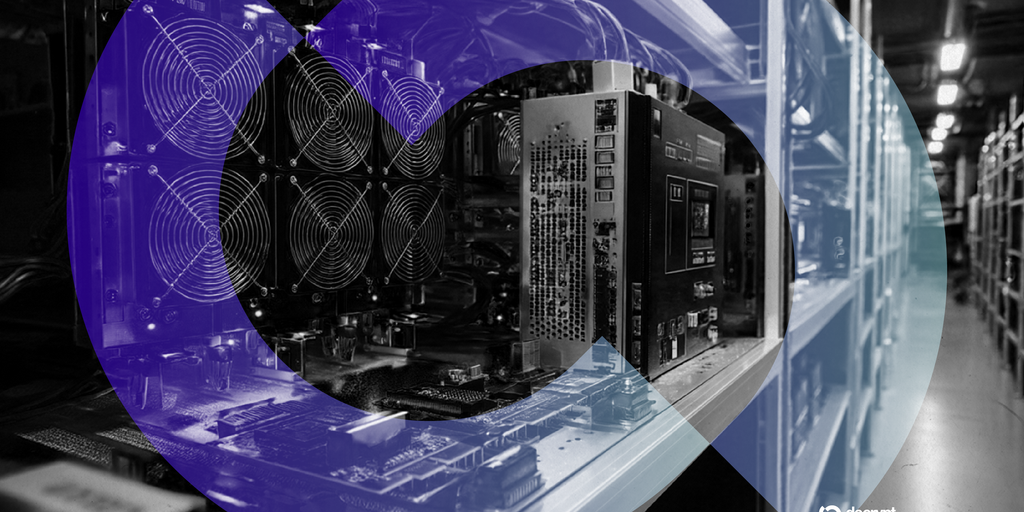
Here’s the tension investors are weighing. Bitcoin mining economics favor specialized ASICs and ruthless cost discipline; AI workloads favor GPUs or custom accelerators, dense networking, and advanced cooling—very different stack decisions. Bitdeer is trying to straddle both. The company said mass production of its Sealminer A3 is underway, a sign it still sees ASIC-led mining as core. At the same time, development of a new energy-efficient mining chip, SEAL04, has been delayed—an admission that silicon roadmaps rarely move in straight lines, especially when capital and engineering bandwidth are being reallocated toward HPC.
That trade-off is where credibility gets tested. Building rigs in the U.S.—a path Bitdeer discussed earlier this year—can reduce supply chain risk in a market where much equipment still sources from China, and it may help with customer trust and potential government contracts on the AI side. But domestic manufacturing, AI data center fit-outs, and networking upgrades all pull forward capex while revenue ramps on a lag. When a quarter shows a sharp EPS miss alongside a big revenue beat, it often means the platform is scaling—but the cost base and one-time items (R&D, inventory build, depreciation, or write-downs) are pulling the P&L into the red. Equity markets typically punish that mismatch until there’s line-of-sight to margin normalization.
From a positioning standpoint, Bitdeer’s share performance held up better than several competitors over the last month before the drop, which suggests some investors had started to price in an HPC story. The key next step is evidence that AI-oriented capacity can be monetized at stable, contracted rates, not just marketed as optionality. If management can demonstrate utilization, pricing power, and lower unit energy cost per teraflop while keeping Bitcoin hash economics efficient, the strategy can compound. If chip delays persist and AI capex crowds out mining efficiency gains, the spread between narrative and cash flow will stay wide.
For miners broadly, repurposing megawatts from ASIC hash to AI inference or training can be rational—especially in regions with stranded power or favorable tariffs. But it introduces different operational risks, different customer profiles, and arguably tighter scrutiny on energy use. Investors will reward those who show disciplined capacity allocation and clear payback math rather than broad promises about “AI demand.”
Bitdeer is leaning into the right addressable market. Now it has to convert equipment announcements like Sealminer A3 and its U.S. manufacturing ambitions into measurable gross margin progress—while getting SEAL04 back on track. Until the P&L reflects that, this remains a show-me stock in a volatile miner tape.