Bitcoin, Ethereum Eye Jobs-Fed Crosscurrents as Rate Cut Bets Teeter
BTC hovers near $89.8K and ETH retakes $3K ahead of the Fed’s first 2026 decision. With a 97% hold priced, Powell’s labor tone could swing March cut odds—and crypto risk premia.

Because Bitcoin
January 28, 2026
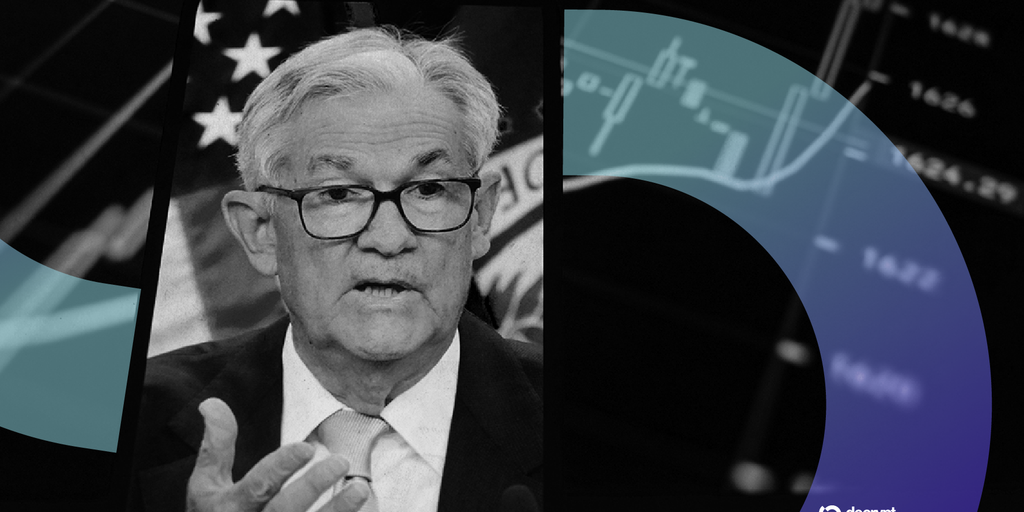
Bitcoin and Ethereum are edging higher into the Federal Reserve’s first policy call of the year, but the decision itself isn’t the story—Powell’s language on the job market is. When the market is already 97% confident the target rate stays at 3.5%–3.75% (CME FedWatch), tiny shifts in labor-market framing can yank risk appetite back and forth faster than any basis-point move.
Price check: Bitcoin trades around $89,842, roughly flat week-on-week, while Ethereum has reclaimed $3,000, changing hands near $3,026. Into the event, BTC and ETH rose about 2.1% and 3.5% on the day, respectively. Unemployment printed 4.4% in December, little changed from November’s revised 4.5%. Futures and swaps markets have essentially pre-wired the hold; the marginal change will come from how Powell weights jobs versus inflation progress.
This is where traders often get caught in narrative whiplash. Jummy Xue of Axis argues the “hold” is a given, and the real tell is the Fed’s sensitivity to a 4.4% unemployment rate. If Powell highlights labor resilience over disinflation, odds of a March cut likely fade, denting the “continuous easing” story that has buoyed Bitcoin. In that setup, the medium-term impulse can skew risk-off as real yields drift higher and liquidity narratives cool. Xue also expects investors to lean back into a debasement trade—allocating to harder-to-dilute assets like commodities, real estate, and crypto—if policy stays reactive to growth jitters without promising near-term cuts.
Aurelie Barthere at Nansen reads Powell as still attentive to labor softness since December. She notes an economy accelerating into the first half of 2026 on fiscal support while the labor market cools from the demand side. Overnight index swaps currently imply fewer than two cuts after Powell’s term ends in June. If his tone matches December’s dovish cadence, markets could pull forward cut pricing into March and April, lifting digital assets via lower discount rates and higher risk-taking.
Prediction markets remain cautious. On Myriad, a platform owned by Dastan, participants assign roughly a 33% chance that the Fed delivers more than a 25 bps of cuts before July—hardly a runaway easing cycle. That split view explains why crypto can rip on a single dovish phrase and retrace just as quickly if the press conference leans “higher-for-longer.”
My read: the hinge is Powell’s characterization of labor “balance.” Any emphasis on resilience, slack absorption, or patience would likely reprice front-end cuts out of March, pushing real yields up and keeping the dollar firm—historically a headwind for BTC/ETH. Conversely, rhetorical focus on continued cooling in labor demand and “risk management” could bring forward easing expectations, compress real rates, and extend crypto’s bid. In a market driven by reflexive narratives, that communication delta alone can swing flows more than the unchanged policy rate.
Two practical tells to watch: - Press conference nuance around jobs: phrasing like “gradual rebalancing” vs. “resilient” has outsized impact on March/April OIS. - Funding and basis post-Fed: a dovish read should steepen crypto term structure and tighten USD funding stress; a hawkish tilt does the opposite.
The macro tape doesn’t end Wednesday. QCP Capital flags a Jan. 30 funding deadline to avert a U.S. government shutdown, ongoing Senate uncertainty over the CLARITY Act, and choppy FX—each capable of amplifying post-Fed volatility. In other words, even a “neutral” statement can catalyze two-way action if subsequent headlines tug rate expectations.
For now, Bitcoin near $89.8K and Ethereum above $3K reflect a market walking a narrow path: positioned for gentle easing, but alert to any signal that labor strength keeps the Fed sidelined. In that environment, traders often do better reacting to Powell’s labor lexicon than guessing the dot plot months ahead.