Bitcoin slips to $87K as JPMorgan tokenizes money-market fund on Ethereum; Trump named Crypto Person of the Year
Markets cool as BTC hits $87.2K and ETH $2.95K. JPMorgan tokenizes a money-market fund on Ethereum while Trump takes Crypto Person of the Year amid fresh policy signals.

Because Bitcoin
December 16, 2025
Crypto opened the week in risk-off mode. Bitcoin fell 3% to $87,200, Ethereum dropped 6% to $2,950, BNB eased 2% to $868, and Solana slid 3% to $128. Relative bright spots: XDC gained 4%, CC rose 3%, and SKY added 2%. Over the weekend, majors were steadier—BTC flat at $89,700; ETH, BNB, and SOL each up about 1% to $3,150, $888, and $133, respectively—while MNT jumped 10% and MERL and TRX climbed 3%.
The development that deserves real attention: regulated finance is inching onto public chains. JPMorgan launched a tokenized money-market fund on Ethereum, settling fund shares onchain. That choice—public rails over permissioned-only infrastructure—signals where scale and interoperability may ultimately live. When a bulge-bracket institution tokenizes short-duration assets, it tests whether intraday liquidity, programmable compliance, and composability can compress costs without compromising controls.
Regulators and market plumbing are nudging in the same direction. The SEC issued a no-action letter permitting certain tokenized stock offerings and followed with an investor bulletin on crypto custody basics. The OCC granted national bank charters to Circle, Ripple, and other crypto firms, a move that could normalize fiat settlement and custody around tokenized flows. Xstocks enabled tokenized equities to move between Solana and Ethereum via Chainlink’s CCIP, hinting at cross-chain order routing for real-world assets. PayPal applied for a bank charter in Utah, potentially tightening the loop between payments, stablecoins, and traditional deposits. Coinbase and Robinhood joined a new U.S. “tech force” recruiting engineers to build government AI infrastructure—an unusual public–private alignment that could spill into standards for identity, cybersecurity, and onchain data.
Why this matters now: - Technological: Public L1s offer neutral, global settlement. If institutions can enforce transfer restrictions and KYC at the token level, the need for walled gardens weakens. - Business: Tokenized cash and equities could reduce reconciliation and cut fund-share settlement cycles. Money-market funds onchain may evolve into collateral that moves 24/7. - Psychological: Institutional presence often changes perceived career and counterparty risk, pulling cautious allocators off the sidelines. - Governance: Public-chain transparency competes with the industry’s instinct for permissioned control. The balance between auditability and privacy will define adoption speed.
Elsewhere in market structure, the Senate pushed the crypto market-structure markup into next year, slowing near-term legislative clarity. MetaMask expanded beyond Ethereum with native Bitcoin support, letting users buy, send, and receive BTC directly in-wallet—an interface shift that could narrow the UX gap between ecosystems without altering Bitcoin’s base-layer design.
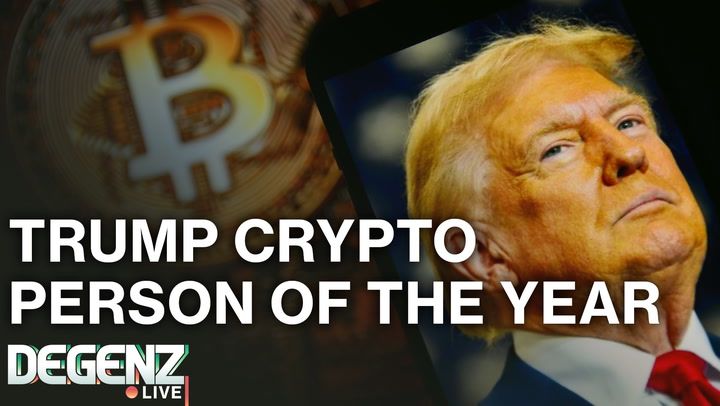
Politics pierced the narrative. Trump was named Crypto Person of the Year and said he would “look at” pardoning Samourai Wallet developer Keonne Rodriguez, instructing the attorney general to review the case ahead of his prison reporting date. That kind of signaling can influence how developers assess legal exposure, even if outcomes remain uncertain.
On risk horizons, Grayscale argued quantum computing is unlikely to drive crypto valuations in 2026, while urging long-term post-quantum planning. It’s a sensible separation of near-term pricing from multi-decade security upgrades. In token economics, Bittensor (TAO) completed its first halving, cutting issuance from 7,200 to 3,600 tokens per day—another reminder that supply schedules can recalibrate network incentives overnight.
Additional currents: Vanguard’s quant equity head likened Bitcoin to a “digital labubu,” even as the firm opened client access to trade crypto ETF products. The UK moved to bring crypto fully under FCA oversight. Tether weighed tokenizing its stock after a share sale that could value the firm around $500 billion. Netflix greenlit a crypto-themed comedy, One Attempt Remaining, starring Jennifer Garner.
If there’s a pivot underway, it’s subtle: tokenized cash and equities are being tested on open rails while policy grudgingly adapts. Price will oscillate, but settlement architecture tends to move in one direction once it proves cheaper and programmable.