Bernstein Hikes IREN Target to $125 After $9.7B Microsoft Deal—Power Is the Real Moat
Bernstein lifts IREN to outperform with a $125 target after a $9.7B, five-year Microsoft cloud pact. The call centers on miners’ captive power edge as AI demand collides with grid scarcity.

Because Bitcoin
November 4, 2025
Bernstein’s upgrade on IREN isn’t about hype; it’s about power. The firm raised its rating to outperform and lifted its price target to $125 from $75 after IREN announced a five-year, $9.7 billion cloud services agreement with Microsoft. Shares traded above $69 on Tuesday, up roughly 2% after gaining as much as 6% intraday—and they’ve climbed about 1,000% in six months. Sydney-based IREN, historically a Bitcoin miner and data center operator, will provide Microsoft access to Nvidia’s GB300 GPUs under the pact.
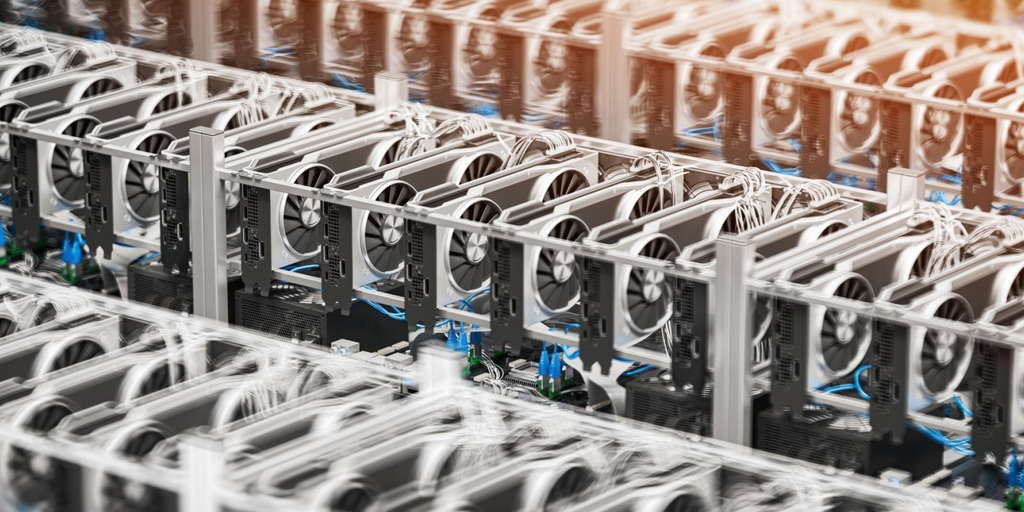
What’s driving the re-rate is not simply “AI exposure.” It’s the structural advantage miners have built by controlling cheap, large-scale power in a grid-constrained world. That power footprint—hard-won through years of site development, interconnect queues, and energy market relationships—can be repriced from Bitcoin hash to AI compute when demand surges. Bernstein is effectively saying IREN’s captive power is an income-generating asset that can be dynamically allocated to the highest-yield workload.
This is becoming a pattern. Cipher Mining disclosed an approximately $5.5 billion, 15-year lease with Amazon Web Services to deliver turnkey space and power for AI workloads. In September, Cipher also signed a 10-year, roughly $3 billion high-performance computing colocation deal with Fluidstack, which is backed by Google. And in August, Google increased its support for Terawulf with an incremental $1.4 billion backstop for project-related debt, bringing its total stake to $3.2 billion. The common thread: tech majors want power-dense, ready-to-scale capacity; miners know how to deliver it.
The nuance many miss: Bitcoin mining and AI compute are not interchangeable. AI clusters require tighter networking, higher memory bandwidth, more sophisticated cooling, and steadier uptime windows. But if you already control power, land, and interconnects—and you can upgrade to AI-grade facilities—you sit on the scarce input. That scarcity creates pricing power with hyperscalers, which are willing to sign multi-year commitments to lock capacity.
There are trade-offs. Concentration risk shifts from Bitcoin price and network difficulty to counterparty and contract execution. Power price volatility and regulatory scrutiny don’t disappear; they change shape. Communities may push back on expanded loads, especially if benefits don’t flow locally. And investors should remember that AI cycles can overbuild; if supply catches up, those premium yields compress.
Still, IREN’s strategy—monetize power optionality and arbitrage between BTC mining and AI compute—offers a hedge. When Bitcoin is soft, the AI pipeline can cushion cash flows; when BTC strengthens, hash economics can reclaim capacity. That flexibility is the economic engine here, and it’s why Bernstein highlights “power access” as the edge.
Context matters: Bitcoin traded near $101,320 on Tuesday, down about 5.8% over 24 hours and more than 11% over the week, according to market data. In a Myriad prediction market, over 80% of respondents sided with the view that BTC could slip to $100,000 versus a competing call for $120,000. If that cautious tone holds, the market may keep rewarding miners that can pivot power toward AI until crypto sentiment stabilizes.
The takeaway isn’t that every miner can flip a switch and become an AI cloud. The takeaway is that, in an era where megawatts are the bottleneck, the owners of low-cost, scalable power—and the teams that can convert it into AI-grade infrastructure—will command the spread. That’s the bet Bernstein is underwriting with IREN.