Apple finally welcomes NFT’s to the IOS operating system, but there’s a catch
NFT’s have been one of the most exciting developments derived from crypto and blockchain technology over the past few years, their multiple use cases, alongside a wide variety of new ecosystems and industries where they can be used in, have made them explode in popularity.

Because Bitcoin
March 8, 2023
NFT’s have been one of the most exciting developments derived from crypto and blockchain technology over the past few years, their multiple use cases, alongside a wide variety of new ecosystems and industries where they can be used in, have made them explode in popularity.
Although there has been a massive amount of interest when it comes to NFTs, and their potential implementation to the existing operating systems, this cutting-edge crypto technology has specifically caught the attention of one of the biggest online communities out there: the gaming community.
The Gaming industry
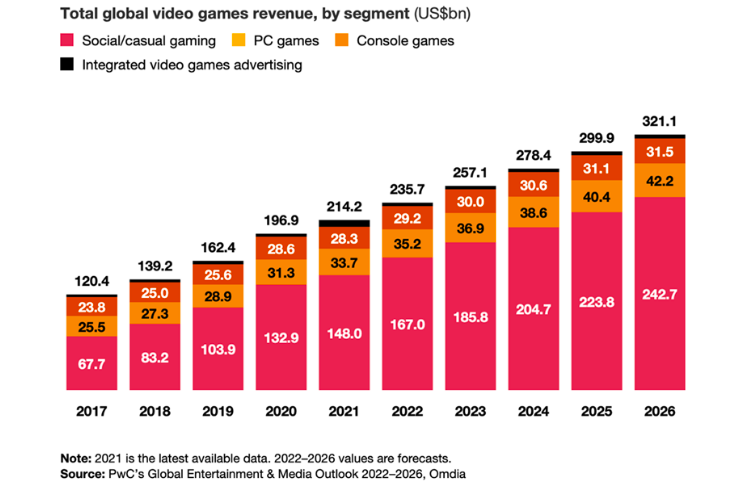
According to the World Economic Forum (WEF), the gaming industry has grown from $108.4bn in 2017 to approximately $198.40bn in 2021 and is expected to reach a value of $321bn U.S by 2027. Making it one of the fastest growing ecosystems in the modern world.
Source: weforum.org
Considering that there are approximately 2.7 billion active players worldwide, the merge of NFTs into the already established gaming ecosystem could potentially revolutionize both industries by offering a more interactive and engaging experience for gamers. This in turn, would exponentially increase the interest for NFTs, bringing a whole new crowd into the crypto atmosphere and therefore increasing the amount of capital that pours into blockchain protocols and crypto native projects. A win win situation, right? Well… it’s not that easy.
What is an NFT?
For the newcomers, let’s first define what an NFT is. A non-fungible token or NFT can be cataloged as a cryptographic asset within a blockchain. These assets possess unique identification codes and metadata that distinguishes each one from the other.
Among their multiple use cases, Non-fungible tokens can be considered as a digital vehicle in which artists and creators can represent their physical assets such as music, real estate and even artwork.
Apple’s big announcement
Big tech/gaming companies have been flirting with the idea of digital ownership for some time now, and some of the biggest names have even begun slowly introducing NFTs into their operating systems. Companies like Twitter, Adobe, Google and Meta already have a head start when it comes to the integration of digital assets. But there was one major player that users around the world had excitedly been waiting for to break the silence regarding the adoption of this innovative technology…
After Tim Cook’s remarks regarding NFTs in an interview for the New York Times back in december of 2021, where he stated “that crypto and NFTs are exciting and instrumental to the future”, Apple, one of the greatest companies worldwide, has finally taken the step forward in what many consider a long overdue announcement. The tech giant will be allowing developers to sell their NFTs through the app store, within games and apps.
But there’s a catch: users and developers are not quite as satisfied with the approach Apple is taking, given that the company will take a 30% fee for each NFT transaction within the iOS system. Not only that, they will not allow transactions outside of USD. Crypto is not an option.
The Road Ahead
Considering that the NFT trading volume has plummeted during the bear market and that overall interest for this ecosystem has lost the fire that fueled the 2020-2021 crypto bull run, companies who are now looking to adapt this crypto technology into their operating system have a stronger hand when it comes to the integration of NFTs into their business models. Given the current macro outlook, the road ahead looks rough for crypto overall, as it is currently considered a highly speculative industry that is still at a very early stage in its development. This puts pressure on most blockchain companies and developers to bend their hands and give into the rigorous terms that a company like Apple demands, in order for them to introduce these innovative protocols into their well established operating systems.