Air-Gapped Bitcoin Wallets Aren’t a Silver Bullet: Coldcard’s RNG Flaw Reframes Offline Security
Air-gapped wallets keep keys offline, but Coldcard’s firmware error that reduced seed entropy—driving ~$114M in losses—shows offline ≠ risk-free. Here’s what actually secures Bitcoin.

Because Bitcoin
August 4, 2026
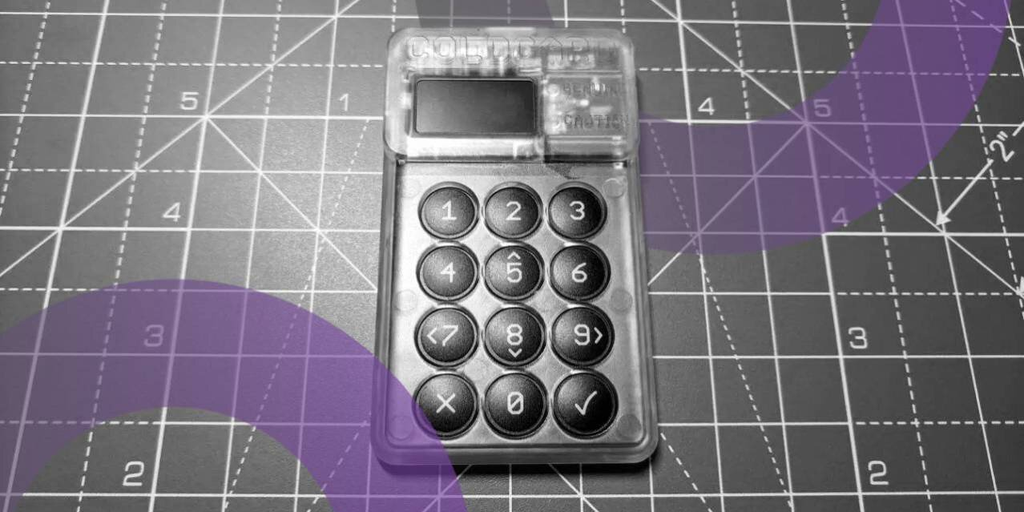
If offline were enough, the Coldcard incident wouldn’t exist. A firmware build mistake—introduced in March 2021 and disclosed in late July 2026—constrained randomness for some devices, shrinking the effective seed space. Attackers didn’t need network access; they needed weaker entropy. Losses tracked by researchers climbed in waves from roughly $88 million to nearly $114 million in Bitcoin within days, prompting many holders to rotate funds amid warnings that exposed addresses could still be targeted. For a product line launched in 2017 and long viewed as security-forward, the lesson lands hard: the air gap helps, but entropy decides.
What “air-gapped” actually solves An air-gapped wallet is a non-custodial device that never engages Wi‑Fi, Bluetooth, NFC, or direct internet. Transactions move via QR codes or removable media; keys never touch a networked machine. That isolation meaningfully reduces remote attack surface, malware risk, and phishing pathways. Examples include: - ELLIPAL Titan (QR-only flow) - Keystone (QR-based signing) - Foundation Devices’ Passport (Bitcoin-first design) - Blockstream Jade (supports fully air-gapped Bitcoin transactions via QR) - Coldcard (Bitcoin-only; offline signing via microSD and optional QR)
By contrast, widely used hardware wallets from Ledger and Trezor typically connect by USB or Bluetooth during normal operation. Air-gapped devices prioritize isolation from the outset—but they still rely on secure hardware, sound firmware, correct random number generation, and careful development practices.
The Coldcard failure mode Coinkite’s disclosure tied the issue to a firmware build error that limited the randomness used to derive seed phrases. A reduced key space is inherently guessable. With a constrained entropy pool, key search becomes tractable enough for determined adversaries—especially when modern tooling and AI-assisted heuristics accelerate candidate testing. Once an attacker lands the private key, control of funds follows. Researchers observed multiple exploitation waves, with losses ballooning from about $88 million to nearly $114 million, and user migrations as alerts circulated about additional vulnerable addresses.
Why offline isn’t the security boundary The security boundary in self-custody often sits at entropy, not connectivity. Offline signing blocks network adversaries; it does not cure weak randomness, flawed builds, or supply chain mistakes. This is where psychology creeps in: “offline” feels absolute, so users over-index on connectivity and underweight firmware provenance, build reproducibility, and RNG quality. Businesses that manufacture hardware wallets also operate complex pipelines where a single misconfiguration can persist for years. Ethically, vendors face a narrow path: disclose quickly, ship mitigations, and communicate clearly without inducing chaos—while users deserve verifiable builds and auditable processes, not just trust.
What still matters—even with an air gap - Seed generation: Prefer verifiable entropy. When supported, add user-supplied randomness (e.g., dice rolls) and confirm the device actually incorporates it. Reproducible builds and public tests help. - Firmware hygiene: Treat firmware like critical infrastructure. Verify checksums, follow vendor guidance, and pay attention to security bulletins—especially when key material was created under a suspect version. - Physical control: Air-gapped devices can still be attacked with physical access depending on protections. Keep custody tight; inspect for tampering. - Transaction vigilance: QR or microSD flows slow you down by design. Use that pause to validate amounts, addresses, and change paths before signing. - Architecture choices: Avoid single points of failure. Many opt for multisig with heterogeneous vendors, splitting trust across independent implementations. Distribution across custody methods can reduce blast radius. - Recovery data: The recovery phrase remains the crown jewel. Theft or loss compromises the wallet regardless of connectivity.
A quick refresher on the “wallet” Wallets don’t hold coins; they hold keys that authorize movements recorded on-chain. Public keys function like addresses; private keys are the authorization. Custodial services hold keys for you (think major exchanges), while non-custodial setups put you in charge—and on the hook for protection.
Air-gapped hardware remains a strong layer for self-custody. It just isn’t the guarantee many assume. The Coldcard episode shows that the decisive variable is randomness quality and the integrity of the build pipeline. Get those right, and the air gap compounds strength. Get them wrong, and “offline” is only a comforting word.