Big Tech’s AI Hunger Buoys Bitcoin Miners: IREN clinches $9.7B Microsoft pact, Cipher inks $5.5B AWS lease
IREN lands a $9.7B AI cloud deal with Microsoft and Cipher signs a $5.5B, 15-year AWS lease, as miners redeploy power and racks from Bitcoin to GPU compute. Stocks jump.

Because Bitcoin
November 3, 2025
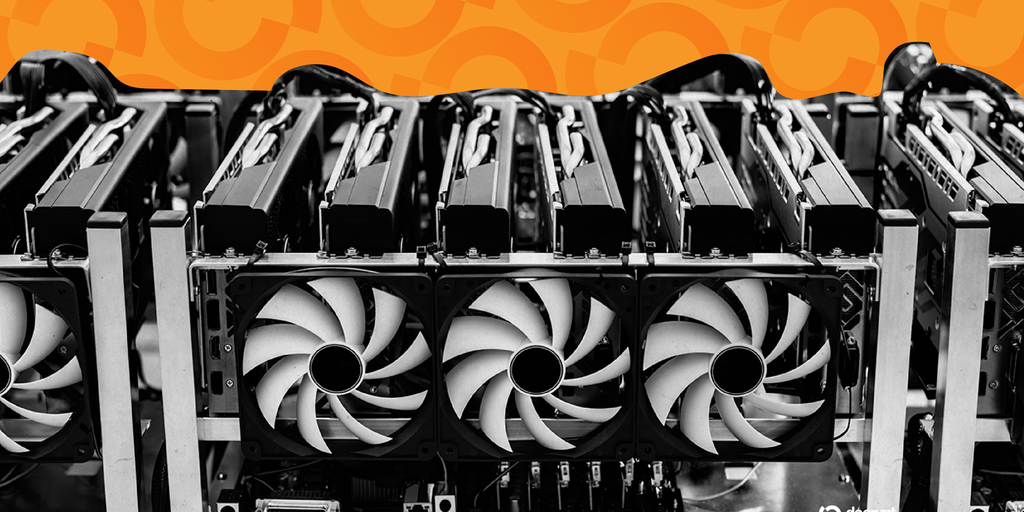
AI demand is turning Bitcoin mining footprints into hyperscale-ready infrastructure. Two fresh mega-deals underscore the shift: Australia’s IREN secured a multibillion-dollar Microsoft agreement tied to Nvidia GB300 deployments, while Cipher Mining locked in a long-duration lease with Amazon Web Services. Shares in both miners surged as investors priced in steadier, contract-backed cash flows over volatile block rewards.
What actually changed - IREN, once a pure-play Bitcoin miner and now an AI cloud compute operator based in Sydney, announced a $9.7 billion agreement with Microsoft. The arrangement provides Microsoft access to Nvidia GB300 GPUs. - IREN highlighted key terms: contract value of $9.7 billion, a five-year average term, 20% prepayment, 200 MW of IT load across data centers, and scheduled GB300 GPU deployments. - The stock ripped to nearly $73 on Monday morning in New York—up roughly 21%—before easing to about $67.30. Microsoft shares also ticked higher. - Separately, Nasdaq-listed Cipher Mining unveiled an approximately $5.5 billion, 15-year turnkey space-and-power lease with AWS to host AI workloads. Cipher plans to deliver 300 MW in 2026 with both air and liquid cooling to the racks. The stock traded about 22% higher.
This is not an isolated burst of activity. Hyperscalers have been moving aggressively to secure capacity: - In September, Cipher signed a 10-year, roughly $3 billion high-performance computing colocation deal with Fluidstack, which is backed by Google. - In August, Google increased its support for Bitcoin miner Terawulf via an incremental $1.4 billion backstop for project-related debt financing, bringing total support to $3.2 billion.
The deeper read: compute as a miner’s new product The core trade here is “power plus proximity” rather than proof-of-work. Miners already command cheap energy, robust interconnects, land, and permitting—assets that are hard to replicate quickly. Packaging that into fixed or semi-fixed AI capacity transforms their revenue mix:
- Contract anatomy matters. IREN’s five-year average term and 20% prepayment partially de-risk buildout and supply chain timing for GB300s, while 200 MW of IT load anchors utilization. AWS’s 15-year lease with Cipher favors durability and bankability, pushing miners toward utility-like cash flows rather than commodity-exposed hash revenue. - Thermal and density are the new moat. Cipher’s blend of air and liquid cooling acknowledges rising rack densities for next-gen GPUs. Operators that can deliver low PUE, liquid-ready halls and grid flexibility often win the queue. - Optionality remains. As GPU cycles evolve, miners can reprice, expand, or reallocate halls between AI and self-mining depending on power markets, BTC economics, and GPU supply. That optionality is a strategic lever many traditional data center REITs can’t wield as quickly. - Concentration risk is real. Hyperscaler exposure can compress margins and increase counterparty dependency. Prepayments reduce risk, but long-term ROIC will hinge on execution, power hedges, and upgrade pathways when GB300 successors arrive.
Investor psychology will keep this volatile. Some shareholders chase the AI compute narrative; others worry about capital intensity and grid scrutiny. The ethical debate around allocating scarce power to AI versus other uses will persist, especially as miners expand in regions with constrained infrastructure. The projects most likely to endure tend to blend transparent energy sourcing, local grid services, and credible community benefits.
Market context Bitcoin traded near $106,700 at writing, off about 3.1% on 24 hours and down more than 7% on the week, per CoinGecko. A Myriad prediction market shows close to 60% siding with crypto entrepreneur KBM, looking for a move toward $100,000, while the remainder aligns with trader Mando, eyeing a push to $120,000. That split captures the current tape: macro and flows pulling price in two directions while miners increasingly decouple their business models from pure hash economics.
The throughline: hyperscalers are paying up for time-to-compute. Miners who can turn megawatts into GB300-ready capacity with credible timelines are finding themselves in the deal flow—and, for now, in favor with the market.