A16z’s $15B bet meets a flat crypto tape; Powell–Trump friction, X smart cashtags, Monero’s ATH, and new compliance rails
A16z raises $15B as Bitcoin holds near $90.6K. Powell claims charges stem from defying Trump on rates. X adds smart cashtags; Monero hits ATH; Ripple, BNY Mellon expand compliant rails.

Because Bitcoin
January 12, 2026
The most important signal today isn’t price—it’s capital. A16z just locked down $15 billion for its American Dynamism push with AI and crypto squarely in scope. That size of dry powder tends to reshape what gets built, who gets funded, and how aggressively founders pursue regulated infra. Prices, meanwhile, barely moved.
Market snapshot - BTC flat around $90,600 - ETH +1% to $3,110 - SOL +2% to $140 - XRP -2% to $2.04 - Top movers: IP +20%, XMR +15% with a new ATH at $590
Why the a16z raise matters now This capital doesn’t chase memetics; it usually funds critical infrastructure. Pair that with BNY Mellon launching tokenized deposits for institutional and digital‑native clients and Ripple securing FCA approval to scale crypto payments in the UK, and you can see the rails consolidating around compliance-forward primitives. The incentive stack is clear: enterprises want tokenization, predictable custody, and settlement finality with regulatory cover. If you’re building wallets, KYC bridges, identity layers, or enterprise-grade data availability, your addressable market likely just expanded.
That shift carries trade-offs. Tether freezing $182 million in USDT tied to Venezuela oil trades underscores how “programmable money” can rapidly become “programmable enforcement.” It improves risk controls and onboarding for institutions but adds censorship vectors that privacy-focused users will avoid—Monero’s all-time high at $590 is a reminder that demand for unmediated settlement doesn’t vanish just because institutions show up.
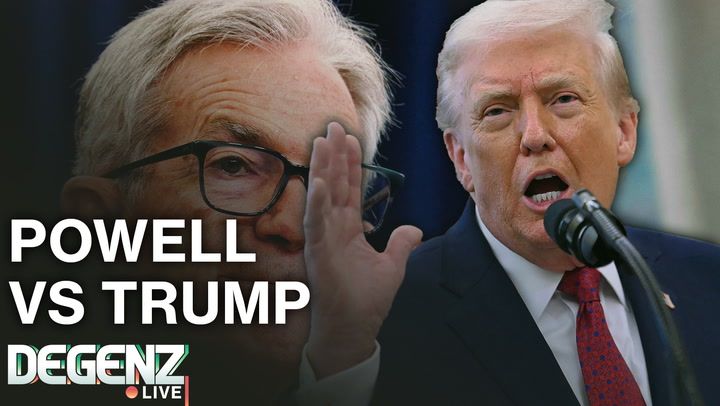
Policy and platform moves shaping flows - Fed Chair Jerome Powell released a video asserting the criminal charges he faces stem from not cutting rates in line with Trump’s preferences. Markets often care less about the noise and more about liquidity direction; still, political overhangs can skew rate path expectations and risk appetite at the margin. - A new House bill proposes barring lawmakers and federal officials from using prediction markets. That would remove a small but symbolically important feedback loop between policy and information markets, likely pushing activity further into retail and offshore venues. - X (Twitter) plans “smart cashtags” with live crypto and stock pricing next to tickers. Expect higher surface area for discovery, faster reflexivity in narratives, and more retail-time alignment between news and order flow.
Long-horizon models keep stretching VanEck floated a $53 million Bitcoin scenario by 2050, implying roughly 29% annualized growth on assumptions around adoption, trade settlement, and a store‑of‑value glidepath. As with any DCF of monetary premium, the sensitivity to inputs is enormous. Useful as a roadmap, not a promise—yet it does frame why large allocators keep underwriting the asset’s convexity.
What to watch next The through-line today is consolidation of compliant onramps alongside persistent demand for censorship‑resistant tools. A16z’s $15B war chest, Ripple’s FCA pathway, and BNY Mellon’s tokenized deposits will likely pull builders toward enterprise-grade crypto. Simultaneously, the market is reminding us that privacy still clears at a premium. The next leg up probably belongs to teams that bridge these worlds without sacrificing core crypto guarantees while meeting the audit and UX standards institutions require.